Universidad Europea: Preparing Future Fashion Designers with AI + 3D
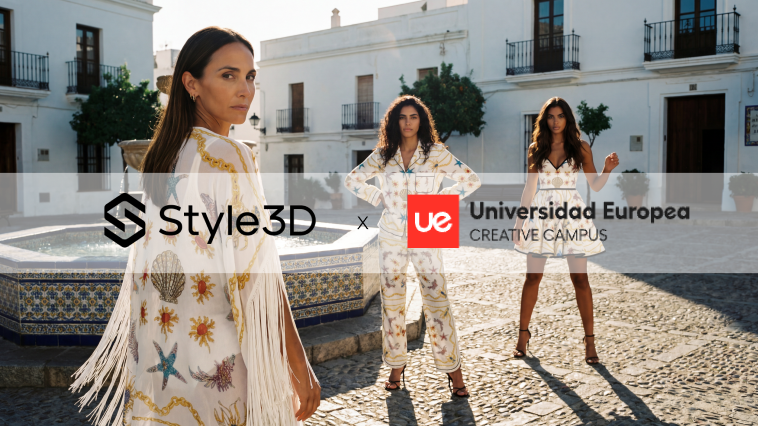
How Universidad Europea is using Style3D to connect digital fashion education, student creativity, professional presentation, and future-ready industry workflows.
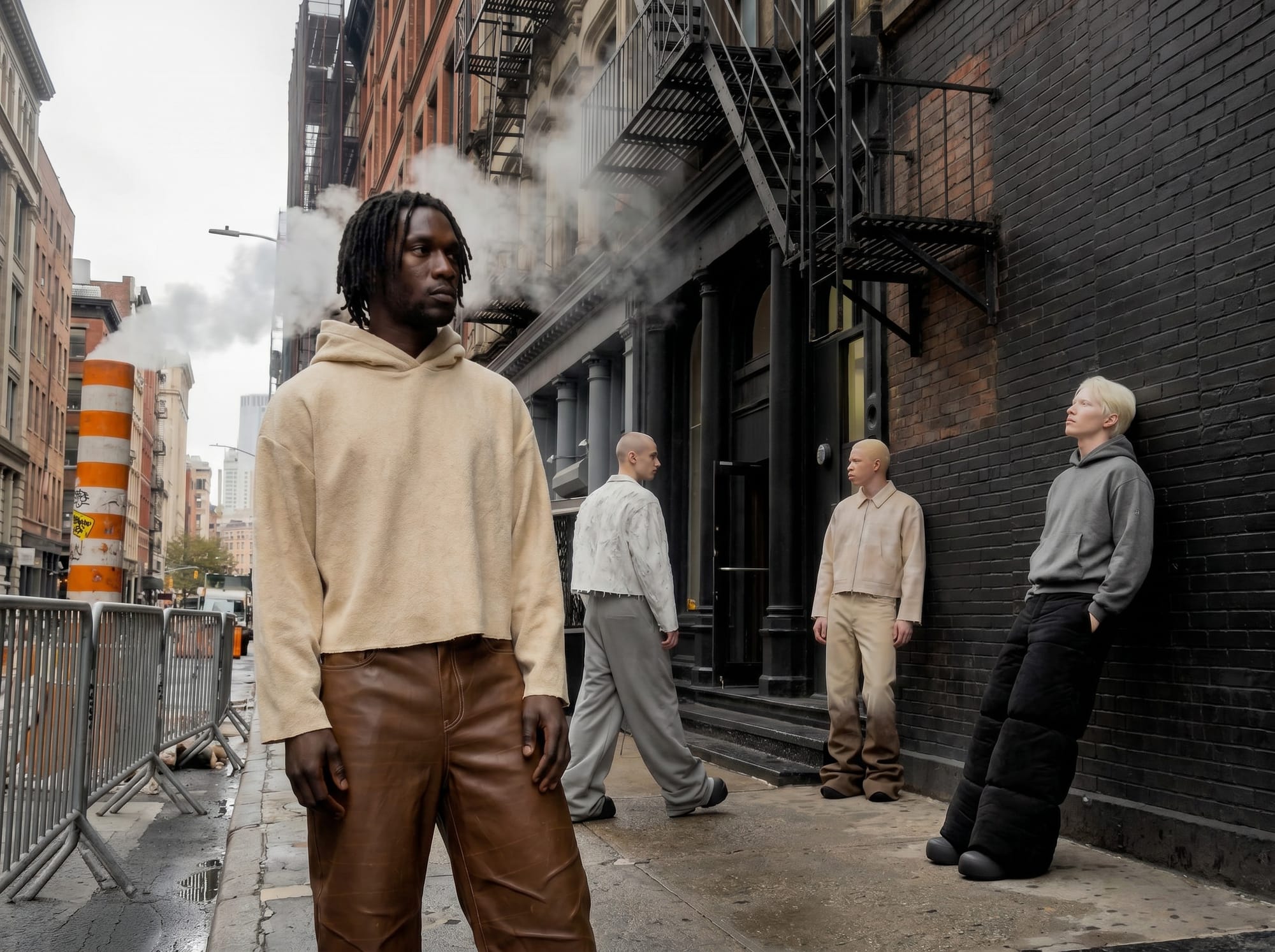
Created by Student Representative Iker Ruiz with AI+3D
Fashion education is changing fast. Students are no longer preparing for a world where design, patternmaking, visual communication, marketing, and production live in separate spaces. Today's fashion talent needs to move between physical and digital creation, use emerging tools critically, and present ideas with the visual quality expected by brands, schools, and future employers.
For Universidad Europea, this shift is not a distant trend. It is already part of how fashion should be taught, learned, and created.
Creative Campus is the Faculty of Design and Creative Technologies at Universidad Europea, located in the heart of Madrid. It brings together disciplines including fashion, design, interior design, animation, and video game design within an interdisciplinary learning environment where creativity, technology, and design converge. Universidad Europea provides students with hands-on learning experiences and close connections to the creative industries. Its Learning by Designing methodology emphasizes practical, project-based education, enabling students to develop solutions to real-world challenges while working across disciplines and engaging with industry professionals.
Through its collaboration with Style3D, Universidad Europea introduced an integrated AI + 3D fashion workflow into the learning experience, helping students explore concepts, develop garments, test materials, create digital presentations, and connect digital design with physical outcomes.
As Marta de la Rocha, Fashion Vice-Dean of Universidad Europea's Creative Campus, explains, the value of the project is not simply about adding new software to the classroom. It is about “driving a paradigm shift in the way fashion is taught, learned and created.
The Challenge: Teaching Fashion for a Hybrid Industry
Universidad Europea was looking for a technology partner that could support its ambition to bring students closer to the realities of a rapidly evolving fashion industry.
One of the key challenges was timing. Introducing 3D design early in a degree program means students may still be building foundations in fashion design and 2D patternmaking. The solution therefore needed to combine advanced digital capability with an accessible learning curve.
The goal was not to teach a single tool in isolation. It was to help students understand digital fashion as a complete design process.
Before Style3D, the course had already included another 3D software solution, with a focus mainly on digital garment creation. The next step was to broaden that perspective: helping students understand how digital materials, collaboration, AI-assisted creative direction, visualization, and presentation can connect within the same project.
As the lecturer describes it, the course was not organized around software features. Instead, it was structured around the stages of the creative process, so every tool had a clear purpose and students understood when and why to use it.
Building the Project with Style3D
For Style3D, the collaboration with Universidad Europea was never only about providing access to software. From the beginning, the project was approached as an education implementation: understanding the university's teaching goals, supporting faculty adoption, and helping the digital workflow become part of the curriculum.
According to Lorena Bello, Style3D's project manager for the collaboration, Universidad Europea was looking for a technology partner that could help bring students closer to the reality of a fashion industry evolving rapidly through digital tools, 3D creation, AI, and new forms of visual communication.
"One of the biggest challenges was introducing 3D design at a very early stage of the degree", Lorena explains. “At that point, many students are still building their foundations in fashion design and even 2D pattern making, so it was essential to find a solution that combined advanced technology with an accessible learning curve.”
Style3D worked closely with the university throughout the process, supporting teacher training, curriculum adaptation, technical implementation, and ongoing assistance. The team also helped connect the classroom with active industry professionals, allowing students to understand how digital fashion technologies are being used in real creative and product development environments.
For Lorena, the key lesson is that education technology only creates value when it is integrated into a coherent teaching methodology.
“Today, the question is no longer whether these technologies should be introduced into fashion education, but how to integrate them in a way that genuinely enhances learning,” she says. “When implemented as part of a coherent teaching methodology, they stop being standalone tools and become a natural part of the design process.”
The Solution: Bringing an Integrated Digital Fashion Pipeline into the Classroom
Style3D’s broader education solution is designed to support a complete AI + 3D fashion learning workflow, from AI concept exploration → 3D garment creation → material and fabric simulation → pattern/CAD development → digital styling → visual presentation → portfolio-ready output.
At Universidad Europea, the collaboration brought this vision into the classroom through a focused implementation of Style3D's digital fashion pipeline. The project introduced students to connected stages of digital creation, including 3D garment development, digital materials, simulation, visualization, AI-assisted creative exploration, and professional presentation.
Rather than positioning Style3D as a single-purpose software tool, the project helped students understand digital fashion as a broader creative and technical process. They could see how design ideas, garment development, material behavior, visual storytelling, and presentation quality can inform one another within the same learning experience.
The full Style3D education workflow can be adapted to different course levels and teaching goals. In this case, Universidad Europea implemented selected parts of that workflow to support its digital fashion curriculum and upper-year AI + 3D learning experiences, creating a practical foundation for future expansion.
0:00
/0:05
Created by Student Representative Javier Mora with 3D+AI
Student Story: Javier Mora's “Aliquindoi”
For student Javier Mora, Style3D became a bridge between cultural research, digital patternmaking, textile experimentation, and physical production.
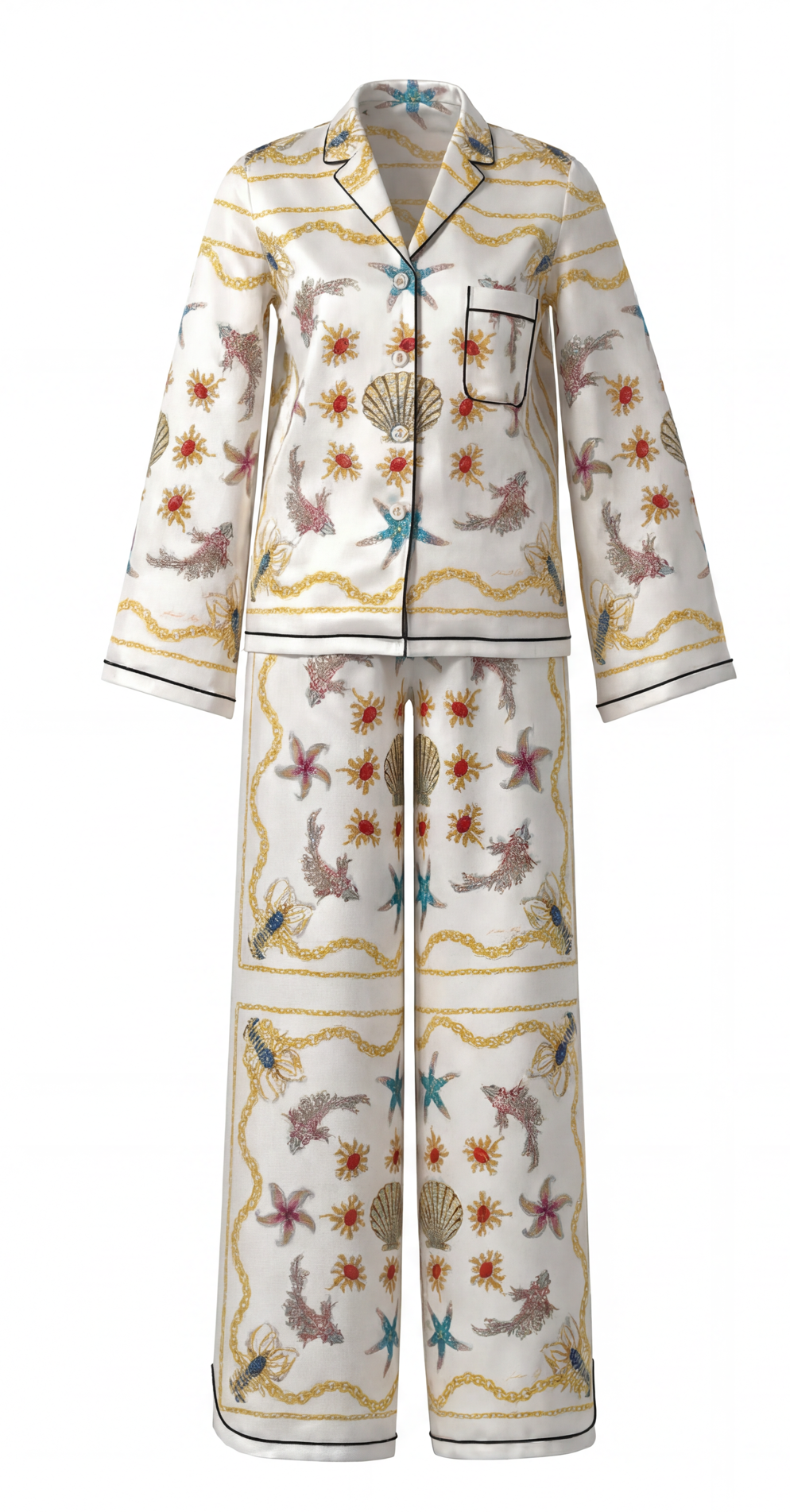
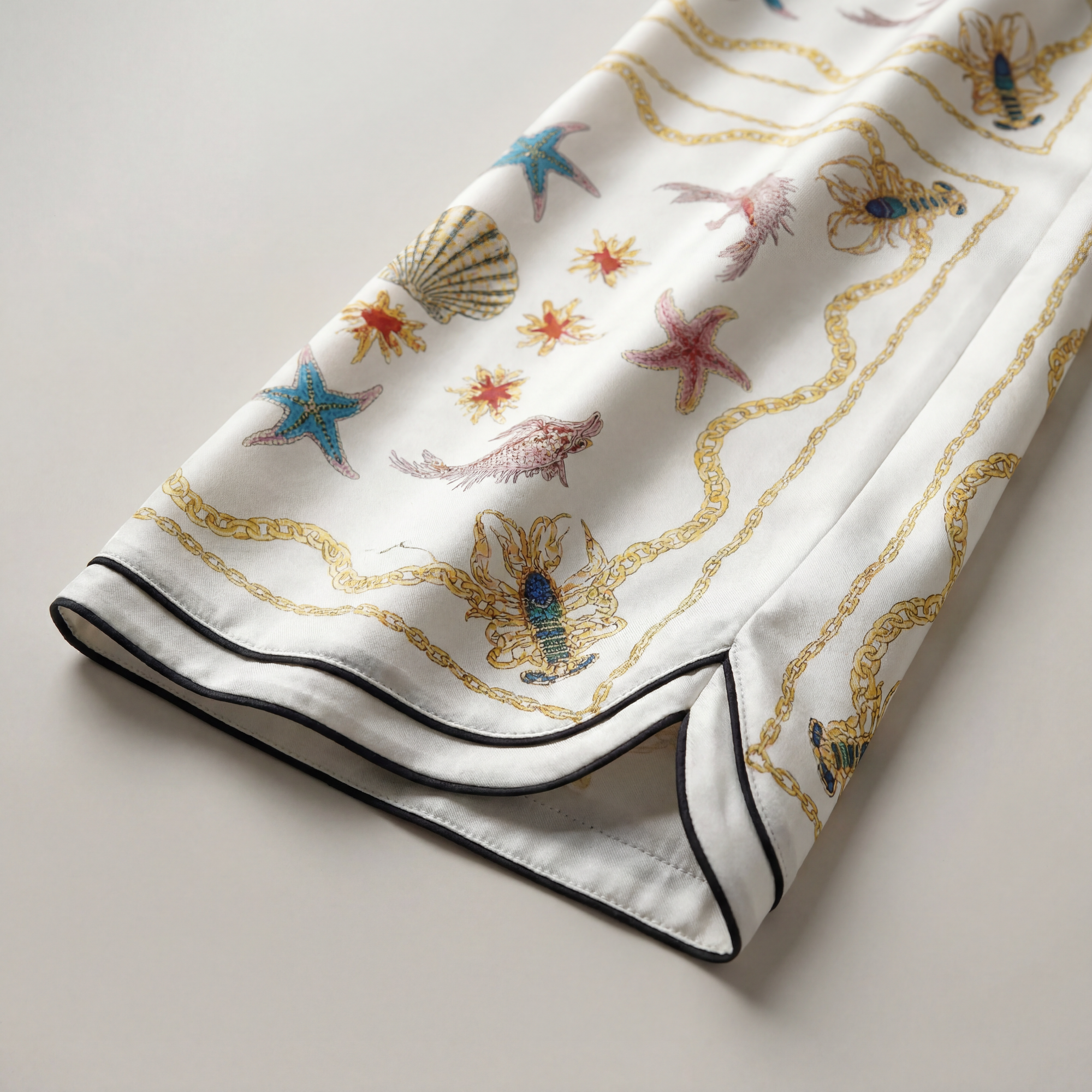
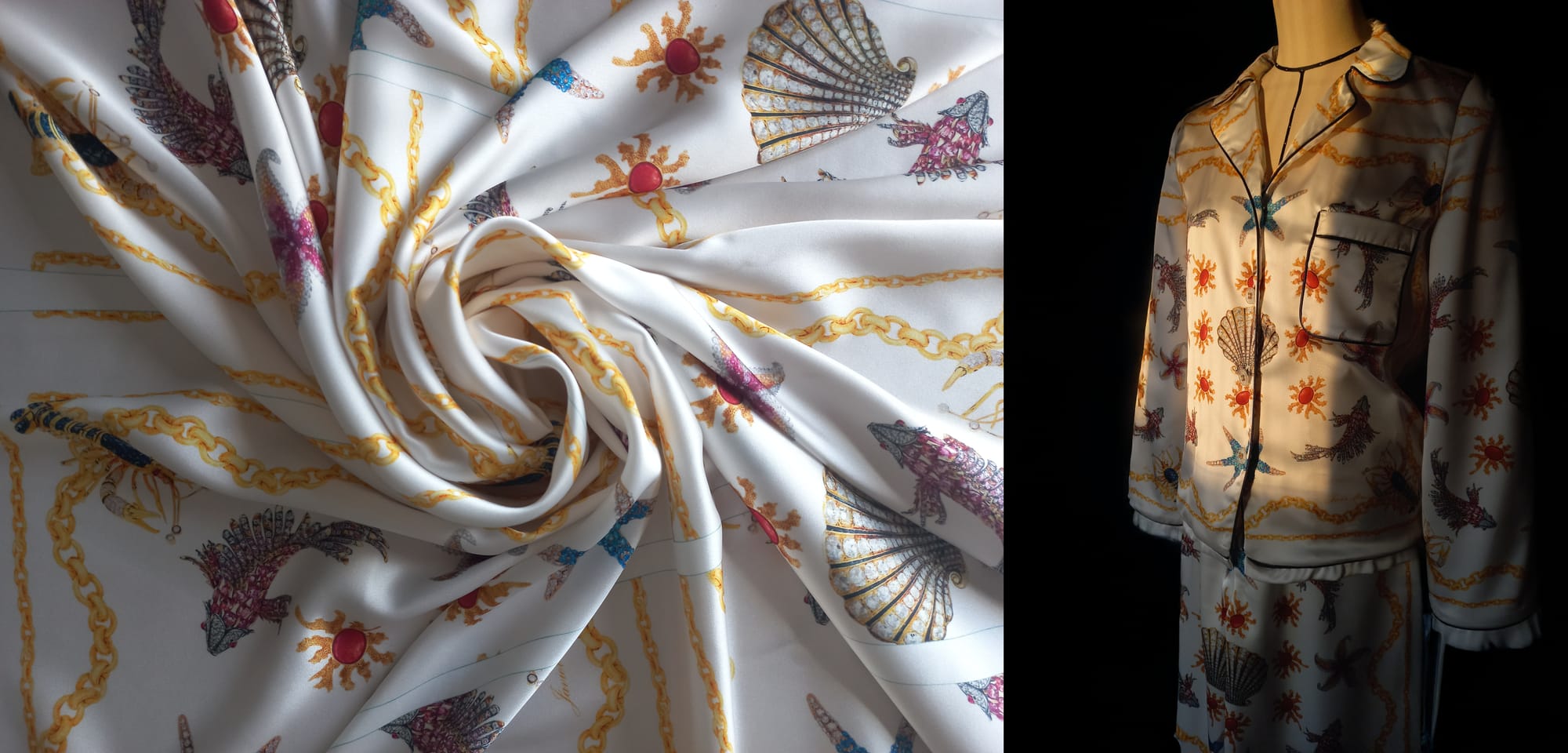
His project, “Aliquindoi,” explored Gianni Versace's vision of fashion and art through Italian roots, then connected that influence with Andalusian culture. The collection reflects ideas of cultural blending, southern identity, light, movement, water, tradition, and belonging.
Once the pieces were defined, Javier developed the garment patterns in Style3D Studio from his fashion illustrations while designing textile prints. The software allowed him to make pattern changes and see results immediately on screen, testing structures, volumes, fit, silhouettes, colors, and fabric types before moving into physical production.
Created by Student Representative Javier Mora - Digital Garments
Created by Student Representative Javier Mora - Real Garment & Fabric
For the final physical piece, Javier exported the patterns directly from Style3D for plotter printing and prepared the marker for digital textile printing. The garment was then produced using printed fabric, creating a direct link between the digital design process and a real physical outcome.
That connection changed how he understood digital fashion. At first, he had doubts about whether the digital process could be trusted. But after checking the digital pattern measurements against the printed fabric patterns and seeing that everything matched correctly, his perception shifted.
“If the patterns are created correctly and the fabric shrinkage ratios are properly specified, the final result is very good and highly accurate,” Javier says.
The workflow also supported a more efficient and sustainable process. Even though it was his first time using Style3D, Javier only needed two adjustments: one to the marker and one to the fabric shrinkage ratio. In practice, he needed only one prototype to define the design.
For him, digital fashion also changed how a student designer can present work professionally. Instead of relying only on costly physical campaigns, students can create product visuals, communication contexts, and brand environments digitally.
“Digital fashion helps to democratise access to such a complex industry, Javier says, "allowing designers to present their work in a more professional, coherent and visually impactful way.”
Student Story: Iker Ruíz's “From Here”
Iker Ruíz's capsule collection, From Here,” questions the meaning of "here". For Iker, place is not only physical. It shifts depending on where we are, while one constant "here" remains: the heart or mind, where creation begins.
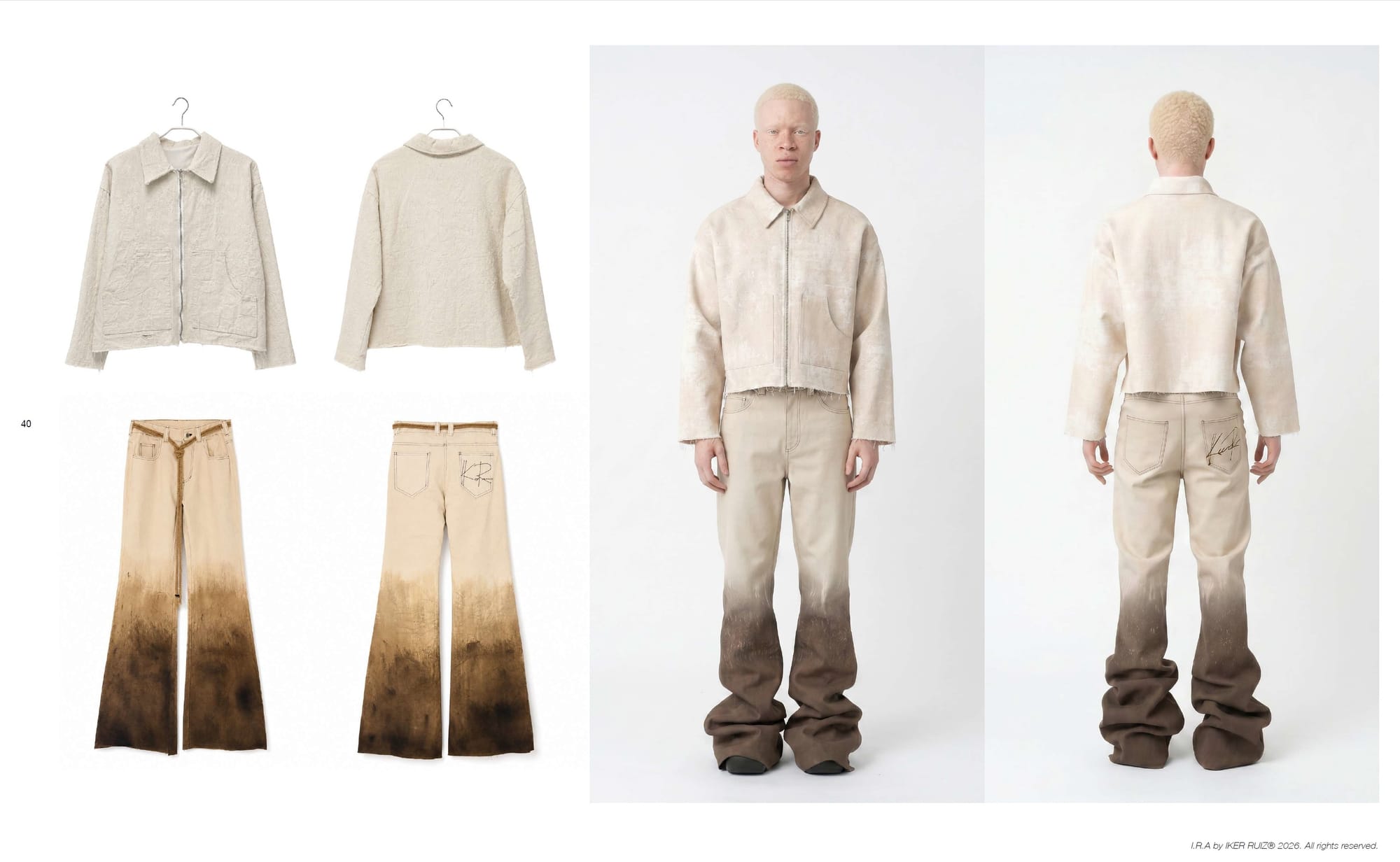
Inspired by large cities, pollution, dirt, wear, buildings, mud, and urban pressure, the project explores the stress of contemporary city life.
Iker used Style3D alongside the physical development of the garment. The digital and physical processes moved together, reflecting the same concept from different angles. Style3D allowed him to see ideas in real time, turn them into something tangible, test fabric variations, modify patterns, and evaluate fit on an avatar with chosen body measurements.
Physical Garment VS Digital Garment
In this project, Iker digitized a garment that had already been made physically. The process taught him that translating a real garment into 3D is not only about pattern accuracy. The bigger challenge is capturing textures, colors, visual effects, and the character of the real piece.
Seeing the garment in 3D gave him new ways to understand and present the work. Instead of only explaining a concept, he could show it directly. The digital version also created space for further experimentation, new visuals, and professional presentation.
For Iker, the value of AI + 3D is clear: it helps students and emerging designers present their work at a higher standard with lower production barriers.
"It's "like having an entire creative studio in a single tool,” he says, “a design studio, a garment workshop, professional cameras, lighting equipment, and more.”
Outcomes: From Classroom Projects to Professional-Quality Work
The collaboration helped students move beyond software practice and develop more complete digital fashion projects. They learned to explore ideas in 3D, test design decisions visually, work with digital materials, and present final outcomes with a higher level of clarity and polish.
Lecturers also gained a more project-based way to teach digital fashion. Instead of introducing tools as isolated functions, they could guide students through creative and technical decisions within a connected project environment.
At the school level, the project became a concrete example of how AI and 3D tools can support teaching innovation, interdisciplinary learning, and stronger student-facing outcomes. It connected creativity, technology, and professional practice in a way that could be shared beyond the classroom.
Preparing Students for the Future Workplace
A central value of the project was career readiness. Fashion graduates today need more than design talent alone. They must be able to communicate ideas clearly, understand digital workflows, move between physical and virtual processes, and present their work in formats that feel relevant to brands, studios, and future employers.
Style3D gave students a practical environment to build these capabilities through real creative projects. They practiced digital garment development, pattern thinking, material simulation, AI-assisted visualization, portfolio presentation, and, in selected projects, the connection between digital design and physical production.
This made the final work stronger, but it also made the students’ thinking more visible. In projects like Javier’s and Iker’s, AI + 3D workflows helped students show not only what they designed, but how they researched, tested, refined, and communicated creative ideas in a digitally fluent way.
From Digital Skills to a New Fashion Education Model
The broader significance of the project is not simply that students learned new tools. It is that AI and 3D became part of a more contemporary way to teach fashion creation.
In traditional education, concept development, garment construction, visual communication, and production thinking can often feel separated. This project showed how digital workflows can bring those areas closer together, helping students understand fashion as an integrated creative and technical process.
This reflects a broader direction for fashion education: moving beyond single-tool training toward learning experiences that build digital fluency, creative confidence, and industry-relevant ways of working.
Build a Future-Ready Fashion Curriculum
Bring AI and 3D into the classroom with Style3D Studio and Style3D AI, empowering students to design smarter, build digital skills, and prepare for the future of fashion. With Style3D Education Solution, universities like Universidad Europea get a dedicated education workflow designed to make AI-powered 3D learning more structured, practical, and industry-ready.
Book an Education Consultation or Apply for an Education Trial to bring the future of fashion education to your campus.
Subscribe to the Style3D newsletter for the latest insights, innovations, and industry updates.
You might also like
Jul 13
Y-Star: Increasing Capacity by Around 67% and Delivering Orders in as Little as Five Days
Y-Star used Style3D's AI and 3D workflow to turn complex custom teamwear orders into a traceable digital system, raising peak capacity by around 67% from 3,000 to 5,000 pieces per day and delivering orders in as little as five days.
5 min read
Jul 13
Carhartt WIP: Connecting PLM, 3D and Global Teams with Style3D
Carhartt WIP is connecting PLM data, 3D assets, digital twins and global teams with Style3D Cloud and StyleBoard, creating a more collaborative product development workflow across design, technical, sourcing and production teams.
5 min read
Jul 13
V9.3 Customer Story: How Three Fashion Teams Use AI + 3D to Move Faster from Design to Production
Three fashion teams use Style3D AI and 3D workflows to move faster from design ideas to review, fitting, materials and production.
4 min read
Jul 13
Wolf Lingerie: Transforming Lingerie Design with AI + 3D Innovation
Wolf Lingerie uses Style3D to bring AI and 3D innovation into lingerie design, improving speed, visualization and product development.
3 min read
Jul 13
SOHO FASHION: How AI + 3D Keep Design and Clients Perfectly in Sync
SOHO FASHION uses AI and 3D workflows to keep design teams and clients aligned through clearer visuals and faster product decisions.






Member discussion