As McKinsey’s State of Fashion analysis shows, digital product creation has shifted from isolated pilots to scaled deployment, with many apparel players now embedding 3D workflows across design, sampling, and merchandising to protect margins and speed up assortments. In parallel, 3D product photography and virtual sampling have matured into production tools that generate photorealistic visuals before a single garment is cut. Together, these shifts give D2C teams a realistic path to compress sample cycles, cut traditional photoshoot overhead, and test styles in performance channels long before bulk production.
Why Traditional Photoshoots Are a Cost Sink for D2C
For most D2C apparel and accessories brands, the cost of imagery is not just the studio invoice. It is a mix of hidden line items that quietly erode contribution margin: sample-room labor to build multiple protos, rush air freight to hit campaign launch dates, last‑minute rebooks when styles change, and retouching loops for every colorway. Trade publications on virtual sampling point out that reducing physical sample rounds can cut sample time and costs substantially, with some brands moving from multiple prototype stages to a single pre‑production sample in specific categories. Virtual sampling is also now used to publish styles on e‑commerce platforms even before bulk production, allowing orders to be captured earlier in the calendar.
From an operational perspective, the first serious friction appears when a pattern maker releases a proto to the sample room without digital alignment. Every design tweak after that generates another ticket, another lab dip, and another round of studio photography once marketing has already planned a drop. McKinsey reports that outside luxury, apparel margin pressure has remained intense in recent years, making these repetitive offline loops increasingly untenable for brands in the mid‑market band. When you add paid social into the mix, where a single style may need dozens of creatives across Facebook, Instagram, and Google, the economics of solely relying on physical photoshoots start to break.
A useful way to quantify this: virtual sampling commentary has documented cases where companies reduce the number of physical samples by half or more, with corresponding sample cost reductions of up to roughly seventy percent in selected scenarios. While not every brand will hit those figures, the direction is clear: each physical proto you do not sew is one less garment you need to style, shoot, retouch, and reshoot if merchandising changes the assortment. For D2C teams working in drops and weekly edits, that compounding effect over a season can materially shift the marketing budget back toward media instead of photography.
What Photorealistic 3D Product Photography Actually Means
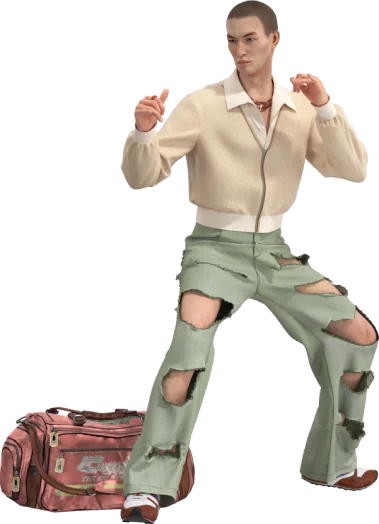
Many marketers still picture 3D visuals as “CGI-ish” content that feels closer to a game engine than a studio shot. Recent 3D product photography platforms have moved far beyond that perception. Independent guides now describe 3D product photography as creating lifelike images directly from digital models, often referred to as virtual product photography or 3D rendering. These tools use advanced rendering engines to simulate real lighting, camera lenses, and materials, generating 2D images that are difficult for consumers to distinguish from traditional photos. Because everything is driven by a 3D asset, the same garment or bag can be rendered at multiple angles, in different focal lengths, and in a variety of CGI environments without building physical sets.
Another set of resources stresses that these rendered assets can be generated before the physical product exists, enabling market testing and e‑commerce publishing ahead of manufacturing. That is crucial for D2C founders and growth marketers who need to run “design sprints” in paid social—testing dozens of styles or colorways quickly, then committing to production only on the winners. 3D rendering workflows described in industrial design literature show that teams take CAD or garment models, apply precise materials (from matte twill to glossed leather), refine textures, and light scenes to create outputs good enough for marketing, investor decks, or marketplace listings.
The practitioner experience of building a zero‑studio pipeline typically follows four steps. First, patterns in DXF or similar formats are imported into a 3D garment environment and draped over avatars that match your target customer’s size block. Second, fabric properties (stretch, weight, thickness) are applied from a calibrated digital fabric library so your sateen dress flows differently from your scuba biker jacket. Third, the resulting garment twin is exported into a rendering workstation or kept within an integrated platform that includes both simulation and rendering. Finally, virtual cameras, lighting rigs, and backdrops are defined to output hero images, detail close‑ups, and 360‑degree views suitable for product detail pages and social ads.
Inside the Zero‑Studio Blueprint for Ads and PDPs
For a cross‑border D2C brand, the “zero‑studio” blueprint is less about replacing photography entirely and more about reserving physical shoots for only the styles that prove they can scale. 3D product photography guides report that virtual platforms can reproduce the outputs of traditional studio setups—high‑resolution stills, configurable views, and even augmented reality assets—without repeated bookings. This aligns well with the paid media reality on platforms like Facebook and Google: you want a cheap way to generate many variations of creatives for early testing, but your final PDP images must still meet marketplace standards and consumer expectations.
A typical blueprint for a Style3D‑powered ecommerce workflow would look like this from the practitioner side:
-
The pattern team imports grading files or creates base blocks directly in the 3D environment, using familiar CAD conventions and size charts.
-
The fabric team digitizes core materials and trims, running small physical tests against standards like ISO 105 for colour fastness to ensure on‑screen colours correspond closely to actual goods.
-
The 3D artist or designer generates a set of camera presets for on‑figure, ghost mannequin, and flat‑lay render angles that match your brand guidelines.
-
The performance marketing lead builds creative templates where only the garment mesh and background variables swap, enabling a batch export of dozens of ad‑ready creatives in a single render queue.
Trade coverage of 3D virtual sampling highlights that high‑quality virtual samples are already being used directly in e‑commerce, not just internally. For D2C growth teams, the lift is to connect this ability to media buying: you can upload photorealistic renders into Facebook Ads Manager, run budget‑controlled split tests by silhouette or print, and green‑light only the best‑performing SKUs for physical sampling and full studio treatment later. When the underlying 3D workflow is integrated, those renders also serve as the foundation for AR try‑ons, 3D configuration, and interactive lookbooks—without needing separate photoshoots for each format.
Case Example: From Virtual Sampling to 80,000 Orders
One of the clearest illustrations of zero‑studio thinking applied beyond clothing comes from the bags and accessories category. In the authorized Style3D case study with Tianqin Bags, the company used a digital workflow to support operations that secured 80,000 orders for complex customized products. This scenario shows how a strong 3D pipeline can give both buyers and end customers enough confidence to commit at scale using digital visuals, rather than waiting for multiple rounds of physical sampling for every client variation. The case describes how the brand’s fast sampling process became a differentiator in winning that volume of business.
The same logic applies to D2C fashion founders running cross‑border campaigns on platforms like Meta and Google. Once your core silhouette and construction are validated, you can treat surface design—colours, prints, and placements—as a digital playground. A 3D and AI platform supports batch creation of variant renders: for example, one backpack model can be rendered in dozens of colourways and graphic placements targeting different regions, all based on a single underlying geometry and construction BOM. Instead of booking a new shoot every time a retailer asks for a regional capsule or co‑branded graphic, you deliver photoreal visuals directly from the 3D pipeline and reserve physical prototypes for late‑stage approvals or top‑of‑production (TOP) checks.
In parallel, manufacturing‑oriented case references show that integrated 3D workflows can compress development times dramatically when deployed at scale. For instance, Style3D has documented a scenario where a partner reduced development time from three days to ten minutes by integrating 3D software into their sampling and communication processes. That kind of compression matters directly to ecommerce teams, because faster sample approval cycles mean product pages can go live earlier in the selling season, with photorealistic imagery linked tightly to production data. The fewer days you spend waiting on physical proto photos, the more flexibility you have to respond to ad performance and adjust your assortment on the fly.
Honest Tradeoffs: Where 3D and AI Still Need Help
The narrative that 3D workflows instantly solve every imagery and sampling problem is not accurate. Business of Fashion’s reporting on virtual sampling adoption notes that while brands save time and reduce waste by cutting down physical samples, they also face a learning curve in training designers, pattern makers, and merchandisers on new tools. From a hands‑on perspective, the first friction often comes when experienced pattern makers who are used to manual grading and paper patterns encounter 3D simulation interfaces; they must translate tacit knowledge about balance, ease, and fit into digital parameters and avatar settings, which takes focused training time. Additionally, physics‑based simulation still struggles with specific fabric types—complex performance knits or highly structured bras with underwire require more nuanced tension mapping than generic T‑shirts or woven shirts, even on sophisticated platforms.
Hardware and workflow integration are further constraints. High‑quality real‑time simulation and rendering require capable GPUs and stable networks, which may be a non‑trivial investment for smaller studios. On the systems side, connecting 3D pipelines with existing PLM and ERP platforms requires mapping of pattern metadata, size codes, bill of materials, and colour standards, as discussed in engineering‑oriented analyses of digital product creation. These are solvable challenges, but they mean that a zero‑studio blueprint works best when introduced as a focused pilot (for one category or region) rather than a blanket mandate overnight. D2C founders should plan for a transition period where physical and digital sampling run side by side, and where not every style reaches full photorealistic parity at the start.
Counter‑Consensus: You Do Not Need to Replace Your PLM
A common assumption in the industry is that adopting 3D sampling and virtual photography requires a full replacement of existing PLM or PIM stacks, which makes many D2C brands hesitate. However, both McKinsey’s State of Fashion reports and multiple digital sampling case writeups suggest a different pattern: most successful rollouts start as parallel workflows focused on sampling and visualization, then connect back into core systems later. In practice, this looks like pattern makers exporting DXF files from their existing CAD tools into a 3D environment, where virtual garments are created, fitted, and rendered for marketing, while the authoritative BOM and grading data continue to live in the original PLM.
Over time, brands formalize this bridge—adding structured metadata so that each 3D asset is tagged with style codes, colourways, and size run information. Industrial 3D product rendering case studies describe similar progressions: companies first use CGI for hero images and AR experiments, then expand to full 3D configuration experiences once asset libraries and data structures stabilize. For D2C apparel, this means you can pursue zero‑studio ads and PDP workflows as a modular layer on top of your current stack. When you evaluate platforms, prioritize those that export production‑grade patterns and tech packs and can interoperate with your existing systems, rather than trying to find a monolith that replaces every tool in one step.
Implementing Style3D as a Zero‑Studio Engine for Paid Ads
From a D2C founder or growth hacker’s perspective, the key question is how to turn photorealistic 3D into a performance engine on Facebook and Google rather than just a design tool. Style3D’s documented workflows describe a sequence that is already tuned for that use case. Designers either import existing CAD patterns or create them directly in the platform, convert them into accurate 3D garments with physics‑based fabric simulation, and test fit on customizable avatars. Once the proto stage is validated digitally, they export renders for ecommerce or send patterns and BOMs downstream for production.
The gap many teams overlook is the creative‑testing layer. A lean zero‑studio strategy connects Style3D’s rendering outputs directly into your ad‑ops rhythm. For example, you can schedule a weekly “3D drop” where your team generates fifteen to twenty new image variants per hero silhouette—mixing backgrounds, crops, and colourways—and feeds them into existing Facebook or Google Performance Max campaigns. Third‑party coverage of 3D product photography platforms highlights that maintaining consistent angles and lighting across large catalogs is one of the main benefits of virtual photography, which directly helps brand consistency across ads and PDPs. Unlike conventional shoots, if a creative variant underperforms, your team can revise camera angles or adjust styling virtually and regenerate assets within hours, not weeks.
Crucially, this workflow also benefits content reuse beyond performance media. The same render passes can be adapted for marketplace PDPs that require neutral white backgrounds, as described in general ecommerce photography best‑practice guides, while separate passes with contextual CGI environments can fuel Instagram, TikTok, or in‑app merchandising. For cross‑border sellers, you can localize scenes and props to reflect different markets without touching the underlying garment pattern or sewing extra samples. Over time, as your Style3D library grows, you move from a campaign mindset to an asset mindset: your zero‑studio becomes a persistent engine that can generate high‑confidence visuals for any channel on demand.
Frequently Asked Questions
How realistic are 3D renders compared with traditional photos?
Independent guides on 3D product photography report that modern rendering engines, when fed accurate product geometry and calibrated material data, can produce images that most shoppers cannot distinguish from studio photography. Apparel‑specific 3D platforms add garment simulation tuned for drape, stretch, and layering, which makes on‑figure visuals convincing enough for both PDPs and performance ads, especially after light post‑processing.
Can I really use 3D images directly in Facebook and Google ads?
Yes. Commerce‑focused analyses of virtual sampling and 3D product imagery describe brands using photorealistic renders directly in sales presentations, lookbooks, and e‑commerce listings, often before physical samples exist. From an ad‑platform perspective, as long as your assets meet format and content policies, there is no distinction between a 3D render and a studio photograph; the differentiation is purely about how accurately the image represents the final product.
Do I still need physical samples if I adopt a zero‑studio workflow?
In most cases, yes, but fewer. Virtual sampling literature highlights that some companies have reduced physical sample rounds dramatically, sometimes down to a single pre‑production sample in mature categories. For D2C brands, a pragmatic goal is to use 3D to eliminate early proto and colour‑sample cycles while still producing TOP samples to validate fit, construction, and quality before large‑scale manufacturing or wholesale commitments.
What kind of team skills are required to run 3D product photography?
Industry reports on 3D adoption emphasize that you typically need a combination of pattern‑making expertise, 3D design skills, and marketing coordination. Pattern makers ensure that digital garments reflect real construction and grading; 3D specialists manage avatars, fabric simulation, and rendering; and marketers define which asset variations to prioritize for PDPs, social, and marketplaces. Over time, many brands cross‑train designers so that style development and 3D asset creation happen in one role.
Does 3D product photography help with sustainability goals?
Research and case studies on digital sampling indicate that reducing physical prototypes cuts fabric waste, trims consumption, and shipping associated with sample rounds. When fewer garments are produced purely for internal review or photography, and more decisions are made on digital twins, the upstream resource footprint declines. To credibly claim sustainability benefits, brands should tie their 3D initiatives to recognized standards or reporting frameworks and measure reductions in physical samples over time.
Sources
-
3D Product Photography Platforms: The Future of Visual Commerce
-
Digital Sampling in Fashion: How Brands Cut Physical Samples by 80%
-
Style3D × Tianqin Bags: Efficiency Boost and 80,000 Orders Secured with Ease
-
AI to 3D Fashion: Using Style3D Atelier to Transform Digital Concepts into Production Reality