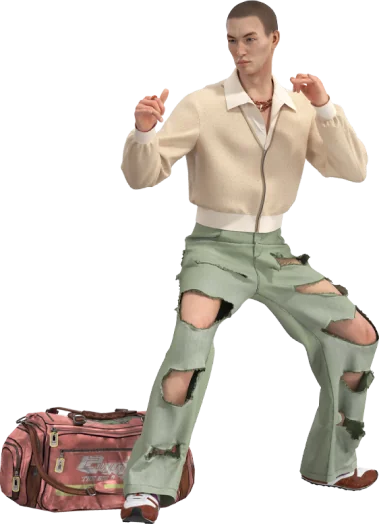
As of Q1 2026, 3D design solutions enable virtual prototyping that cuts sample development time by up to 70% and slashes material waste significantly. Top manufacturers in Japan and China are now using virtual sampling to reduce sample development time by over 50%, with lead times and material costs dropping accordingly.
The Traditional Sampling Bottleneck: Why 20 Days Becomes the Norm
A typical fashion sampling cycle stretches 18–20 days before digital tools enter the workflow. The process begins when pattern makers import DXF files into CAD systems. Sample rooms then sew proto garments using fabric rolls shipped from mills. Couriers transport these samples internationally for design team review. Each iteration adds 1–3 weeks depending on factory location and lab-dip turnaround times.
Sample-room ticket counts often exceed 200–500 per collection across design development, fitting, sales, and production phases. Forty percent of these physical samples never reach production—they are created, evaluated, rejected, and discarded. The timeline compounds across workflow stages: idea capture takes days, fabric sourcing takes weeks, sewing takes days, shipping takes days, and fit review takes days.
A digital garment workflow reduces this sampling cycle from 20 days to 2 days by replacing physical fabric iterations with high-fidelity 3D simulations. The difference is substantial: 18 days eliminated per style, multiplied across hundreds of styles per collection. For fast fashion brands running weekly drops, this compression enables real-time cloth previews in hours instead of weeks.
How Style3D Atelier Compresses Each Workflow Stage
Style3D Atelier provides 3D and AI technology for digital fashion creation across the apparel value chain—from design and sampling to manufacturing and retail. The platform replaces physical garment prototypes with photorealistic 3D simulations, eliminating the need for shipping fabric rolls whose transport alone emits tens of kilograms of CO2 per style.
The workflow begins when designers upload sketches, text prompts, or reference images into Style3D. AI generates initial 3D patterns in under 5 minutes. Designers select from 1,000+ material libraries, apply fabrics to avatars across 50+ sizes, and simulate draping and movement in real-time. The simulation applies mechanical properties—drape, stretch, weight, texture—to show how garments behave under gravity and movement, including layering effects.
Designers adjust seams, grades, or colors, then share links with teams for annotations and approvals. Changes to patterns or materials render in real-time without needing a needle or thread. Export 2D patterns with precise measurements, tech packs, and BOMs for factory handover completes the production-ready workflow.
Patented GPU-based cloth simulation in Style3D provides real-time previews, eliminating weeks of physical waits and enabling hourly iterations. AI-powered garment design automates patterns and trims in Style3D Studio, compressing concept-to-sample from days to hours. This reduces sampling time by 80% through precise digital fabric simulation matching production standards.
Mengdi Group: From 3 Days to 10 Minutes for Style Launching
Jiaxing Mengdi Import & Export Co Ltd (“Mengdi”) demonstrates the upper bound of speed gains. The 40-year-old export manufacturer serving the world’s top apparel brands compressed a workflow that once required several days into a new “10-minute” norm for style launching.
Mengdi built a digital system with around 1,000 electronic boards and 20 enterprise showrooms, accumulating over 10,000 digitized styles, 8,000 virtual samples, and more than 1,000 fabrics. Style3D empowers Mengdi with a complete sample lifecycle management system, boosting efficiency and elevating both customer engagement and brand image.
For placed-print garments, Mengdi uses Style3D’s layout and positioning function to visualize the entire process from pattern design to finished garment. Before, placed-print garments required repeated fabric sampling, printing tests, and several rounds of physical samples—complicated designs could take three or four iterations. With Style3D, sales teams preview print placement and scale for every size, correcting anything that looks “off” before production. Now they usually get approval in one round. Print layout optimization efficiency increased by 10%–30%, significantly reducing trial-and-error costs.
What once took four hours to assemble for pitching materials can now be completed by a newcomer in mere minutes using Style3D’s “Showcase Mini-Program” and Cloud platform. AI-generated try-on images have become Mengdi’s competitive edge—the 3D team’s monthly workload grew from 100–200 sample renderings to more than 700–800.
Lever Style and Springtex: AI Rendering Accelerates Customer Approval
Lever Style is a seasoned apparel manufacturer serving top brands across the U.S., Europe, and Asia-Pacific. Their product range spans womenswear, menswear, knits, suits, outdoor, and cycling apparel. As an early adopter of 3D technology, Lever Style long used digital tools to collaborate with clients efficiently. However, before integrating iWish AI rendering, they faced three specific constraints: lack of precision with limited parameter adjustments, inconsistent perspectives where AI-generated multi-angle views deviated from original designs, and color inaccuracy producing unusable renderings.
With iWish, these issues resolved. Lever Style now fully integrates iWish into operations, leveraging their vast 3D asset library to create hyper-realistic digital samples for customer review. This significantly reduced the need for physical prototypes, slashed development costs, and accelerated production cycles while reinforcing their digital asset ecosystem.
Springtex International, founded in 2004, serves as a trusted manufacturer of premium women’s fashion for high-end malls across Europe and the US. Their vertically integrated smart factory provides comprehensive one-stop solutions, enabling real-time style tracking and streamlining clients’ supply chains. With iWish, Springtex achieved a breakthrough in 3D rendering realism. AI algorithms refine model details, lighting, and fabric textures, allowing clients to preview final products with unprecedented clarity.
Today, almost all Springtex designs are first developed in Style3D and enhanced with iWish for client approval before physical prototyping. This enables quicker feedback, significantly reducing operational costs and development time while strengthening client relationships.
Counter-Consensus: 70% Time Reduction Doesn’t Require Full PLM Replacement
The common claim that 3D adoption requires replacing the entire PLM stack is not supported by implementation evidence. Successful rollouts more often begin as parallel sampling pipelines alongside existing systems. Mengdi integrated Style3D alongside their existing sales infrastructure rather than replacing their entire workflow. Lever Style had long used 3D technology before integrating iWish; Springtex recognized 3D limitations before adding AI rendering.
Manufacturers can layer AI rendering on top of established 3D workflows, using AI for client-facing visuals while maintaining traditional 3D simulation for internal pattern development. This parallels the broader digital sampling adoption pattern—brands implement digital sampling as a standalone workflow for early-stage design and fit, then export approved patterns and tech packs to legacy PLM for production management.
Honest Limitations: Where 3D/AI Workflows Still Have Friction
Despite significant gains, AI-driven digital sampling has unresolved tradeoffs. Fabric drape simulation accuracy for performance knits remains imperfect—stretch fabrics with complex mechanical properties like four-way stretch compression wear or interlock knits with variable recovery can still diverge from physical behavior. The learning curve for traditional pattern makers transitioning to 3D environments is real; the skill set shifts from flat pattern drafting to understanding virtual physics parameters.
Hardware requirements matter too. GPU-accelerated rendering for real-time previews demands modern workstations with dedicated graphics cards, representing capital investment for smaller studios. Integration friction with legacy PLM systems persists; while parallel pipelines work, full bi-directional sync between 3D software and PLM requires custom API development that many mid-sized brands cannot afford.
There’s also a fidelity-speed tradeoff. Tech-pack revision cycles might show acceptable visual fidelity but fail to capture subtle texture variations that affect buyer decisions in premium categories. AI color accuracy, while improved, still requires calibration against physical lab dips for critical color matching in categories like menswear suits where wool fabric variations matter. Brands must decide whether to prioritize iteration speed or simulation accuracy based on category and price point.
The 2026 Inflection Point: Weekly Drops and Real-Time Collaboration Become Standard
3D garment simulation accelerates fast fashion R&D by cutting physical samples from 8–12 to 1–2 iterations, enabling real-time cloth previews in hours instead of weeks. Patented GPU-based simulation and AI-driven fabric digitization reduce costs by up to 80%, powering weekly drop cadences like those in rapid fashion cycles.
Over 32% of fashion companies plan to invest in AI-enabled design software by 2025. Digital sampling replaces physical garment prototypes with photorealistic 3D simulations, and the process typically involves 3D pattern construction, fabric simulation, virtual fitting, stakeholder review, and AI-enhanced concept generation.
Virtual sampling eliminates weeks of physical prototype creation. AI-powered demand forecasting reduces overproduction by predicting exactly what will sell before production begins. By reducing physical samples by 70%, AI tools can meaningfully shrink fashion’s carbon footprint while simultaneously reducing costs.
Style3D’s AI + 3D technology now enables over 2,100 global fashion companies to achieve digital breakthroughs. The technology is proven, the business case is clear, and the competitive advantage belonging to early adopters is measurable in days saved per style and orders secured through faster turnaround.
Frequently Asked Questions
How much time does Style3D save compared to traditional sampling?
Style3D enables virtual prototyping that cuts sample development time by up to 70%. A digital garment workflow reduces the sampling cycle from 20 days to 2 days, with Mengdi Group achieving development time drops from 3 days to 10 minutes for style launching.
What causes the 70% time reduction?
The reduction comes from replacing physical cutting, sewing, and international shipping with real-time 3D simulations. AI generates initial 3D patterns in under 5 minutes, GPU-based simulation provides hourly iterations, and automated pattern generation compresses concept-to-sample from days to hours.
Can digital sampling handle complex prints and placements?
Yes. Mengdi Group uses Style3D’s layout and positioning function to visualize placed prints from pattern design to finished garment, achieving 10%–30% improvement in layout optimization efficiency and usually getting approval in one round.
Does faster sampling compromise quality?
No. High-fidelity AI simulations ensure fit and drape are production-ready. Export includes 2D patterns with precise measurements, tech packs, and BOMs for factory handover, maintaining design precision across global supply chains.
Sources
-
How Can Fashion Brands Use 3D Designs Instead of Physical Samples?
-
How Can a Digital Garment Workflow Reduce Your Sampling Cycle from 20 Days to 2 Days?
-
Transformative Effect of 3D Sampling Technology for the Ready-Made Garment Industry
-
Style3D×Mengdi Group: How Style3D Helped Mengdi Drop Development Time from 3 Days to 10 Minutes
-
Style3D X Lever Style & Springtex: Pioneering AI-Driven Digital Sampling
