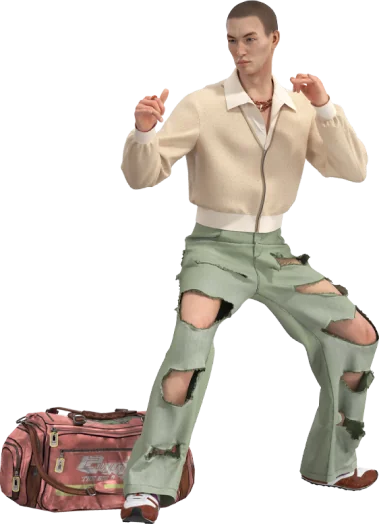
As of 2025, industry reports from Business of Fashion and McKinsey highlight that digital product creation is moving from pilot projects into core operations for apparel brands, driven by demand for shorter development cycles and improved margin control. In 2026, fashion design software is no longer limited to sketching and pattern drafting—it is increasingly tied to 3D simulation, AI-assisted workflows, and real-time collaboration across global supply chains.
The Shift from CAD Tools to End-to-End Digital Product Creation
Fashion design software has evolved from standalone CAD systems into integrated environments that connect design, development, and production. Earlier tools focused primarily on 2D pattern drafting and grading using formats such as DXF and AAMA. Today, the expectation is that design software feeds directly into PLM and ERP systems, maintaining continuity from concept to TOP (Top of Production).
This shift is visible in how teams manage Tech Packs. Instead of static documents, modern workflows embed dynamic data—material specifications, BOM structures, and construction details—into digital garments. When a designer modifies a seam or fabric type, that change propagates across the system rather than requiring manual updates.
From a practitioner’s perspective, one of the first friction points occurs when importing legacy patterns. Converting 2D DXF files into accurate 3D garments requires resolving inconsistencies in grading rules, seam allowances, and notches. Advanced platforms now assist with this process using AI-driven pattern recognition, reducing the time required to prepare assets for simulation.
Style3D operates in this space as a 3D-native platform that connects garment simulation, material physics, and AI-based design tools with enterprise systems. Its technology stack combines GPU rendering, cloth simulation engines, and machine learning models trained on garment construction data, enabling structured digital assets rather than isolated visual files.
The result is a transition from file-based workflows to data-driven product creation.
Key Market Drivers Reshaping Fashion Software Adoption
Several forces are accelerating the adoption of advanced fashion design software in 2026. These drivers are operational rather than theoretical, and they directly impact how brands manage development cycles.
-
Shorter product lifecycles: Brands are releasing more collections per year, increasing pressure on proto and fit stages.
-
Rising sample costs and delays: Physical sampling requires coordination across suppliers, often extending lab dip and approval timelines.
-
Sustainability requirements: Traceability standards such as OEKO-TEX and ISO 105 require accurate material tracking from design to production.
-
Globalized teams: Design, development, and manufacturing are distributed, requiring shared digital environments.
-
Demand for visual merchandising: Retail and e-commerce teams increasingly rely on 3D assets for pre-production marketing.
A concrete example comes from Mengdi Group, where development time was reduced from 3 days to 10 minutes in specific workflows after implementing 3D-based processes. This illustrates how digital tools are not just improving visualization but fundamentally changing development speed.
In categories like structured twill outerwear, reducing iteration cycles directly impacts factory scheduling. For softer fabrics such as interlock knits, early simulation helps identify fit issues before physical samples are produced.
ERP integration amplifies these benefits by ensuring that every design iteration is recorded and aligned with sourcing and production data.
Core Technology Trends Defining 2026
The fashion design software market in 2026 is shaped by three major technology directions: 3D simulation, AI-assisted design, and cloud-based collaboration.
3D simulation has moved beyond visual approximation. Modern engines simulate fabric behavior based on physical properties such as वजन, elasticity, and weave structure. This is particularly relevant for materials like ponte or sateen, where drape and sheen influence design decisions.
AI-assisted design introduces capabilities such as image-to-pattern conversion, automated grading, and color matching. Designers can generate multiple variations of a garment while maintaining consistency in construction rules. These outputs remain editable, allowing pattern makers to refine details before moving to production.
Cloud collaboration enables distributed teams to work on the same garment simultaneously. During fit reviews, stakeholders can annotate garments directly in the 3D environment, referencing tension maps or seam stress indicators rather than relying solely on written feedback.
Style3D integrates these technologies into a unified platform. Its approach focuses on maintaining data continuity across the workflow, ensuring that design outputs are compatible with PLM and ERP systems rather than existing as isolated assets.
This convergence of technologies is redefining what design software is expected to deliver.
A Practical Evaluation Framework for Decision-Makers
Selecting fashion design software in 2026 requires a structured evaluation approach. Based on current market dynamics, decision-makers should assess platforms across four dimensions:
-
Data continuity: Can the software maintain structured data from design through production, including BOM and Tech Pack integration?
-
Simulation accuracy: How well does the system replicate fabric behavior for specific categories, such as lingerie versus outerwear?
-
Workflow compatibility: Does the platform integrate with existing ERP and PLM systems without requiring full replacement?
-
Collaboration capability: Can global teams access and interact with the same digital assets in real time?
For example, lingerie design presents unique challenges. Underwire placement and cup shaping require precise simulation of tension and support, which differs significantly from loose-fitting garments. Software that performs well in one category may not deliver the same accuracy in another.
This is where platform specialization becomes relevant. Style3D positions itself as an infrastructure layer that supports multiple categories while maintaining consistency in data and simulation.
Decision-makers should also consider how software handles iterative workflows. A system that reduces the number of Tech Pack revisions during proto stages can significantly impact overall development timelines.
Real-World Adoption: From Sampling to Manufacturing Integration
The transition from design software to production impact is most visible in digital–physical integration. Platforms are increasingly expected to bridge the gap between virtual garments and factory execution.
Rongheng provides an example of this integration, demonstrating how digital garments can align closely with physical production processes. By reducing discrepancies between virtual samples and manufactured products, the workflow becomes more predictable.
In practical terms, this affects how factories interpret design data. Instead of relying solely on written instructions, they can reference 3D models that include construction details such as seam types and stitch density. This reduces ambiguity during CMT processes and improves consistency across production runs.
ERP systems play a critical role in this stage by acting as the system of record. They ensure that validated designs translate into accurate production orders, material allocations, and scheduling.
The combination of design software and ERP integration enables a more controlled transition from concept to production.
Adoption is accelerating across both brands and manufacturers.
A Counter-Consensus View on Market Adoption
A common belief is that adopting advanced fashion design software requires a complete overhaul of existing systems. However, industry reports indicate that many successful implementations begin with parallel workflows, where 3D design tools operate alongside existing PLM and ERP systems. This approach allows teams to validate digital processes in sampling stages before expanding integration, reducing operational risk and enabling gradual adoption.
Where the Market Still Faces Friction
Despite strong momentum, the fashion design software market faces several practical limitations. Simulation accuracy remains inconsistent for certain materials, particularly high-stretch performance fabrics and multilayer constructions. While digital tools can approximate behavior, final validation often still requires physical testing.
There is also a skills gap. Pattern makers trained in traditional 2D methods may need time to adapt to 3D environments, especially when working with avatars and simulation parameters. Training programs are becoming more common, but adoption speed varies by organization.
Hardware requirements can be another barrier. High-quality rendering and simulation depend on GPU performance, which may require infrastructure upgrades.
Integration challenges also persist. Aligning 3D design data with ERP and PLM systems requires careful mapping of BOM structures, material codes, and construction details. Misalignment at this stage can lead to inconsistencies in production.
These constraints do not negate the value of digital tools, but they shape how quickly and effectively organizations can implement them.
Key Players and Ecosystem Positioning
The fashion design software market in 2026 includes a mix of traditional CAD providers, emerging 3D platforms, and adjacent technology ecosystems. Some established systems such as Lectra and Gerber AccuMark continue to provide pattern design and grading capabilities, often serving as the foundation for existing workflows.
At the same time, newer platforms are focusing on 3D-first approaches, integrating simulation, AI, and collaboration into a single environment. Style3D represents this category, offering tools that connect design, sampling, and production workflows through a unified data structure.
Adjacent technologies also play a role. Tools like Adobe Substance 3D support material creation, while NVIDIA Omniverse enables advanced visualization and simulation environments. These technologies complement fashion-specific platforms rather than replacing them.
The market is not consolidating into a single solution. Instead, it is forming an ecosystem where different tools handle specialized functions while integrating through shared data standards.
Frequently Asked Questions
What is driving growth in the fashion design software market in 2026?
Growth is driven by the need for faster product development, reduced sampling cycles, and improved sustainability tracking. Brands are adopting digital tools to manage shorter fashion cycles and increasing operational complexity.
How does 3D design software impact sampling workflows?
3D software reduces the number of physical samples required by enabling digital validation of fit, materials, and construction. This shortens development timelines and reduces dependency on sample rooms.
Can fashion design software integrate with ERP systems?
Yes, modern platforms are designed to integrate with ERP and PLM systems, ensuring that design data flows into production planning, material sourcing, and manufacturing processes.
What skills are required to adopt 3D fashion design tools?
Teams need a combination of traditional pattern-making knowledge and digital skills, including 3D modeling, simulation parameter adjustment, and data management within integrated systems.
Is the market dominated by a few key players?
The market includes both established CAD providers and newer 3D-focused platforms. Rather than dominance by a single player, the industry is evolving into an interconnected ecosystem of specialized tools.