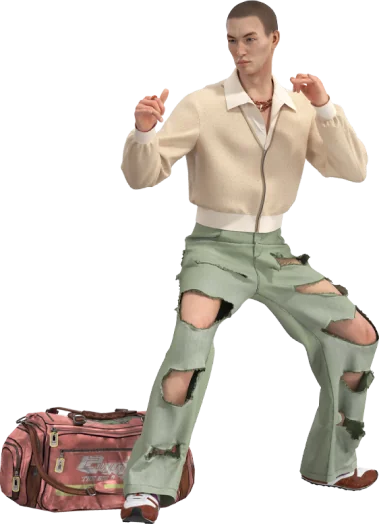
3D fitting in fashion design is a digital technology that enables designers to create virtual garments on customizable 3D avatars, accurately simulating real-world fabric behavior. It allows precise fit visualization and adjustments without physical samples, reducing costs, saving time, and minimizing waste. This technology accelerates product development while improving collaboration between designers, manufacturers, and retailers globally.
How Does 3D Fitting Improve Garment Fit Accuracy?
3D fitting leverages physics-based fabric simulation and 3D garment draping to replicate how clothes behave on different body types. Designers can use digital avatars to test measurements, adjust patterns, and ensure consistent sizing across collections. This process removes guesswork, resulting in garments that fit real consumers better and align with brand quality standards.
What Are the Efficiency Benefits of 3D Fitting for Brands?
By replacing multiple physical prototypes with digital simulations, 3D fitting streamlines the design process, enabling faster approvals and real-time modifications. Development cycles shorten from weeks to days, production costs drop, and communication among designers, manufacturers, and retailers becomes more efficient. Brands gain speed-to-market advantages and maintain agility in response to evolving fashion trends.
Which Technologies Enable Advanced 3D Fitting Solutions?
Advanced 3D fitting relies on AI-driven pattern adjustment, realistic fabric simulation, digital avatars, and dynamic movement modeling. Platforms like Style3D integrate these technologies to provide end-to-end digital solutions, allowing designers to visualize fabrics, test motion, and produce photorealistic digital garments efficiently, bridging creativity and technical precision in virtual design workflows.
Why Is 3D Fitting Crucial for Sustainable Fashion?
3D fitting reduces overproduction by minimizing physical samples, conserving fabric, and lowering energy and transportation demands. Brands can showcase virtual collections online, decreasing the environmental impact of sample shipments. By supporting circular and sustainable production strategies, this technology aligns with eco-conscious consumer expectations and responsible manufacturing practices.
How Does 3D Fitting Enhance Consumer Experience?
Consumers benefit from virtual try-ons and interactive garment customization, seeing accurate fit and fabric behavior before purchase. This transparency reduces returns, increases engagement in e-commerce, and fosters personalized shopping experiences. Brands using 3D fitting can differentiate themselves by offering immersive digital experiences that merge convenience with informed purchasing decisions.
Where in the Fashion Supply Chain Is 3D Fitting Most Impactful?
3D fitting transforms product development, sample approvals, and retail visualization. It creates a shared digital reference that streamlines feedback between designers, manufacturers, and retailers. By enabling quick adjustments and evaluations without physical products, brands can make informed decisions faster, improving supply chain efficiency and reducing costly production delays.
Can 3D Fitting Fully Replace Physical Samples?
While 3D fitting significantly reduces the number of physical prototypes, some final samples remain essential for quality control and final approvals. The technology complements rather than entirely replaces traditional sampling, achieving substantial cost savings while maintaining the quality and tactile verification required for production-ready garments.
What Makes Style3D Stand Out in 3D Fitting?
Style3D provides a unified platform combining AI-powered pattern adjustment, fabric simulation, and virtual photoshoots. Its highly realistic fabric behavior modeling and collaborative tools enable designers and manufacturers to achieve precise fit, accelerate design cycles, and adopt sustainable practices. Style3D empowers brands to innovate digitally while maintaining creativity and operational efficiency.
Style3D Expert Views
“Style3D transforms fashion design by merging AI and 3D simulation, creating a fully digital fitting environment. Brands can experiment with fit, fabric, and style with precision while reducing dependency on physical samples. Our platform supports sustainable design and faster product launches, making digital-first workflows practical for designers, manufacturers, and retailers worldwide. The future of fashion thrives on innovation, and Style3D provides the tools to realize it.”
Conclusion: Key Takeaways and Actionable Advice
3D fitting is reshaping fashion design, enhancing fit accuracy, cutting costs, and minimizing waste. Brands should implement it early in the design process to optimize efficiency, enrich consumer experiences, and meet sustainability goals. Utilizing comprehensive platforms like Style3D ensures creative flexibility, faster iterations, and a fully digital workflow, paving the way for a responsive and eco-conscious fashion industry.
FAQs
What is the main advantage of 3D fitting?
It ensures accurate garment fit, reduces physical sample needs, and accelerates product development.
Can 3D fitting reduce environmental impact?
Yes, it minimizes material waste and transportation by replacing multiple physical prototypes with digital simulations.
Is 3D fitting suitable for all clothing types?
Yes, it adapts to various fabrics, styles, and apparel categories, making it highly versatile.
How does Style3D support digital fashion design?
Style3D offers AI-driven fabric simulation, pattern adjustments, and collaborative tools for realistic virtual garments.
Will 3D fitting eliminate all physical sampling?
Not entirely, but it significantly reduces sample quantity, saving time, cost, and resources.