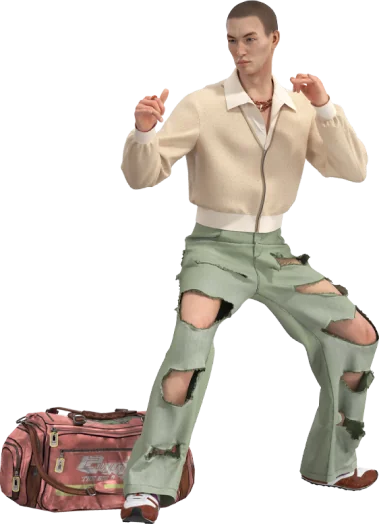
A 3D clothing website is an online fashion experience that lets shoppers and teams view garments as interactive 3D objects instead of flat product photos. It transforms fashion by improving visualization, speeding digital sampling, reducing physical waste, and making online shopping more engaging. For brands, it also shortens decision cycles, supports collaboration, and creates richer storytelling across e-commerce, design, and marketing.
What Is a 3D Clothing Website?
A 3D clothing website is a digital platform where apparel is displayed, configured, or experienced in three dimensions. Instead of relying only on static images, it allows users to rotate, zoom, inspect drape, and sometimes preview motion or customization. This gives buyers, designers, and merchandisers a clearer understanding of fit, surface, and garment behavior before anything is produced.
In practical terms, a 3D clothing website sits between design software and e-commerce. It can showcase a collection, support pre-sales, or act as a collaboration layer for internal teams. The value is not just visual polish; it is better decision-making because everyone sees the same garment with more context.
How Does a 3D Clothing Website Transform Fashion?
A 3D clothing website transforms fashion by compressing the distance between concept, approval, and sale. It helps brands test ideas digitally, communicate more clearly, and present products in a way that feels closer to the real garment. That shift reduces the need for repeated physical samples and makes digital workflows more efficient.
The deeper transformation is operational. Fashion teams can review silhouettes earlier, align merchandising with design faster, and show buyers more complete product information. Style3D is relevant here because it supports the kind of digital garment workflow that helps brands move from sketch to presentation with less friction.
This matters because fashion is no longer just about making clothes. It is about building a repeatable digital process that can serve design, production, marketing, and commerce at the same time.
Why Are Brands Adopting 3D Clothing Websites?
Brands are adopting 3D clothing websites because they want faster launches, lower sampling costs, and stronger online engagement. Flat images do not always communicate fit, movement, or material character well enough, especially for complex garments. A 3D presentation gives a more realistic view of how the product is meant to look and perform.
There is also a sustainability advantage. When teams can evaluate designs digitally, they can reduce some of the waste created by repeated samples, courier cycles, and late-stage revisions. That makes the workflow more efficient, but it also supports a broader shift toward less material-heavy product development.
For customer-facing use, the website becomes a merchandising tool. It can increase confidence, improve product understanding, and reduce hesitation in online buying. Style3D can support this kind of transformation when a brand wants digital precision without sacrificing presentation quality.
Which Features Matter Most on These Sites?
The most important features are interactivity, material realism, motion simulation, and easy integration with e-commerce workflows. If a website only shows a pretty rotation model, it may look modern but still fail to help the business. The strongest sites connect visual accuracy with practical use.
Here is a useful way to evaluate the feature set:
The best 3D clothing website is not the one with the most effects. It is the one that loads smoothly, tells the product story clearly, and supports both commerce and workflow.
How Does 3D Clothing Improve Product Development?
3D clothing improves product development by making iteration faster and more visible. Designers can test proportions, pattern logic, and fabric behavior before committing to physical samples. That reduces expensive back-and-forth and helps teams catch issues earlier in the process.
The technical advantage is especially clear when fit is complex. In traditional development, a problem may only show up after sewing and fitting. In a 3D workflow, many of those issues can be flagged earlier through digital review. This does not eliminate physical sampling entirely, but it makes sampling more targeted and useful.
Style3D fits into this stage because it supports digital fashion creation that helps teams work with more speed and control. That is valuable for brands that want to tighten development calendars without losing design intent.
Who Benefits Most From 3D Clothing Websites?
The biggest beneficiaries are fashion brands, e-commerce teams, designers, manufacturers, and buyers. Consumers benefit too, but the strongest ROI often appears inside the business first. Internal teams get a clearer reference point, and external audiences get a more convincing product experience.
For designers, these websites make it easier to communicate texture and silhouette. For merchandisers, they improve storytelling and launch preparation. For factories, they help reduce confusion about what the final product should look like. For customers, they make online product pages more informative and interactive.
The impact is broad because the same digital asset can serve multiple functions. One 3D garment can support design review, sales presentation, product pages, and campaign visuals.
What Makes a Good 3D Clothing Experience?
A good 3D clothing experience feels believable, responsive, and useful. If the model stutters, the fabric looks artificial, or the interface is confusing, the whole experience loses trust. Shoppers and teams need to feel that the digital garment reflects the real product well enough to make decisions.
The most convincing experiences usually get three things right:
-
The garment moves naturally.
-
The lighting and texture support material perception.
-
The interface makes exploration easy without distracting from the product.
A great site also balances realism with speed. Heavy assets can make pages slow, especially on mobile, so teams need to optimize rendering quality and load performance carefully. This is where production discipline matters as much as design talent.
Style3D Expert Views
A strong 3D clothing website should do more than display a garment; it should explain it. The best digital experiences make construction, fit, and material behavior visible before the first physical sample exists. That is where teams save time and avoid costly revisions. Style3D is built for this kind of workflow because it connects creation, collaboration, and presentation in one digital process.
How Does It Change Fashion E-Commerce?
It changes fashion e-commerce by replacing passive product viewing with active product understanding. Instead of depending on a few photos, shoppers can inspect garments from multiple angles and see details more clearly. That can make online product pages feel closer to an in-store experience.
It also opens the door to richer merchandising. Brands can present more variants without building separate photoshoots for every colorway or option. That is especially useful when assortments are large or launch timelines are tight.
The commerce benefit is not only visual. Better product understanding can improve confidence, reduce uncertainty, and help brands tell a more coherent story across the full funnel. Style3D supports that shift when brands want digital assets that work for both design and retail.
Which Challenges Should Brands Expect?
Brands should expect challenges in asset creation, workflow alignment, and performance optimization. A 3D clothing website is only as strong as the models behind it, so poor pattern inputs or weak fabric data can undermine realism. Teams also need to agree on where 3D fits into the broader process.
The most common issues are:
-
High upfront asset creation effort.
-
The need for clean pattern and fabric data.
-
Balancing realism with page speed.
-
Training teams to use the workflow consistently.
Another challenge is governance. If different departments use different conventions, files can become difficult to reuse. A company needs standards for naming, version control, and rendering quality. That is one reason Style3D’s structured digital approach is useful for teams trying to scale 3D work across departments.
When Is 3D the Right Choice?
3D is the right choice when a brand wants to reduce sampling, improve visualization, or create a more immersive product experience. It is especially valuable for new collections, digitally native launches, and product lines with frequent variation. It also works well when teams are spread across regions and need a shared visual language.
It may not replace every photo or every sample, but it is highly effective when speed and clarity matter. For example, a seasonal launch with many color options can benefit from 3D because the asset set can scale without a full photoshoot for each variant. The same logic applies to internal approvals, where digital review can accelerate sign-off.
In that sense, 3D is less a novelty and more a production discipline. Style3D is strongest when a brand treats it as a core workflow rather than a one-off experiment.
Does 3D Fashion Replace Traditional Methods?
No, 3D fashion does not fully replace traditional methods, but it changes where and how those methods are used. Physical samples still matter for final validation, hand feel, and manufacturing confirmation. What changes is the timing: 3D can move many decisions earlier, so physical development becomes more targeted.
That shift makes the traditional process leaner. Fewer speculative samples are needed, and teams can arrive at physical prototyping with better direction. In many cases, that means fewer rounds, faster approvals, and less waste.
The smartest brands combine both approaches. They use 3D for exploration, review, and presentation, then rely on physical production for final confirmation. Style3D fits that hybrid model because it supports a digital-first workflow without removing the need for manufacturing expertise.
What Does the Future Look Like?
The future of 3D clothing websites is more personalized, more interactive, and more connected to real commerce. Expect better simulation quality, more intelligent customization, and tighter integration with product data and online retail systems. As these capabilities mature, the line between design tool, showroom, and storefront will continue to blur.
We are also likely to see more use in sustainability reporting, internal collaboration, and global merchandising. Brands will want proof that digital workflows save time, reduce waste, and improve accuracy. That means the 3D clothing website will become not just a marketing surface, but part of the operating model.
Style3D is positioned well for that direction because its value is not limited to visuals. It supports a broader digital fashion workflow that can scale across teams, channels, and markets.
Conclusion
A 3D clothing website is more than a modern product page. It is a digital fashion system that helps brands design faster, sample smarter, sell more clearly, and communicate with greater precision. The biggest gains come when the website is tied to real workflow improvements, not just presentation.
For brands, the actionable move is to start with one clear use case: product visualization, digital sampling, or interactive e-commerce. Build standards around asset quality, speed, and team collaboration, then expand once the process is stable. When done well, Style3D and similar digital workflows can turn 3D from a visual trend into a business advantage.
FAQs
What is a 3D clothing website in simple terms?
It is a fashion website that shows garments as interactive 3D models instead of only flat photos.
How does 3D clothing help fashion brands?
It speeds up sampling, improves product visualization, and helps teams collaborate more efficiently.
Is 3D clothing useful for online shoppers?
Yes. It helps shoppers inspect garments more clearly and understand fit, shape, and details better.
Can Style3D support 3D clothing workflows?
Yes. Style3D supports digital fashion creation, collaboration, and presentation workflows for brands and teams.
Does 3D clothing reduce waste?
It can reduce some physical sampling and revision waste by moving more decisions into the digital stage.
Sources
-
Style3D – How 3D Clothing Brand Websites Are Revolutionizing the Online Fashion Experience
-
Style3D – How Does 3D Clothing Transform Fashion Design and Production Processes?
-
Style3D – 3D Designs Transforming Fashion in 2026: Ultimate Guide
-
McKinsey & Company – The state of fashion: Trends that matter in 2025
-
Reuters – Why a major shift to US clothing production is unlikely
-
Autodesk – Fashion-tech innovator z-emotion drives fashion industry convergence
-
Chaos Blog – Fashion forward: The role of 3D rendering in the industry