A buyer sends a picture of a navy commuter jacket and asks whether you already make something similar. You have two close matches. One looks almost identical, but its fabric test report covers an older material. The other has the hidden zip and room for a sweatshirt the buyer asked for. Its fabric report is current for the proposed material, and it only needs darker pocket pulls.
Show the second jacket first. Keep the first as a possible alternative until you can verify its fabric. If you work for an apparel original design manufacturer (ODM), the example below shows what to check before calling a style a match, what to put in the buyer’s email and when to quote a new sample.
Which requirements can rule out a jacket?
Suppose a buyer asks an ODM for a navy commuter jacket that layers over the buyer’s midweight sweatshirt. In this hypothetical example, the buyer requires a concealed front zip, a shell that passes a specified water-repellency check and a first sample by a stated review date. They prefer a matte face and low-contrast hardware. A reference image shows two angled pockets, but the buyer says the pocket angle can vary.
Those instructions have different consequences. Visible hardware on the front would defeat an explicit design requirement. Bright pocket pulls may be an acceptable change if a suitable trim is available. The sample review date needs a separate check with the sample room, even if the existing garment looks ready to show.
Record how each requirement will be judged before searching. For layering, note the buyer’s sample size and the sweatshirt the jacket has to accommodate. For the shell, capture the buyer’s test method, acceptance threshold and which fabric version the evidence must represent. If the buyer supplies only the phrase “water-repellent,” ask what basis they will accept. That answer can change which candidates you shortlist.
What to check before you shortlist a jacket
Search for the construction first. A concealed opening and enough room for the intended layer narrow the set more usefully than a search for visually similar navy jackets. Then use the photos or 3D views to check design direction. A front-view thumbnail may hide the closure construction, and a model wearing the jacket over a T-shirt tells the buyer little about layering over the named sweatshirt.
Open the current style record and compare the front detail, measurements, materials list and notes from the last sample. Make sure they describe the same version. If a new materials list is attached to an old photograph, ask the technical team which one reflects the jacket you can offer. You may have the right-looking jacket and the wrong fabric report in the same folder.
StyleWork by Style3D lists asset search and connected asset libraries for enterprise teams. If your team uses that setup, it can help you find candidate records. The merchandiser and technical team still need to open the files and check each requirement for the buyer’s request.
Which of the three jackets should go to the buyer?
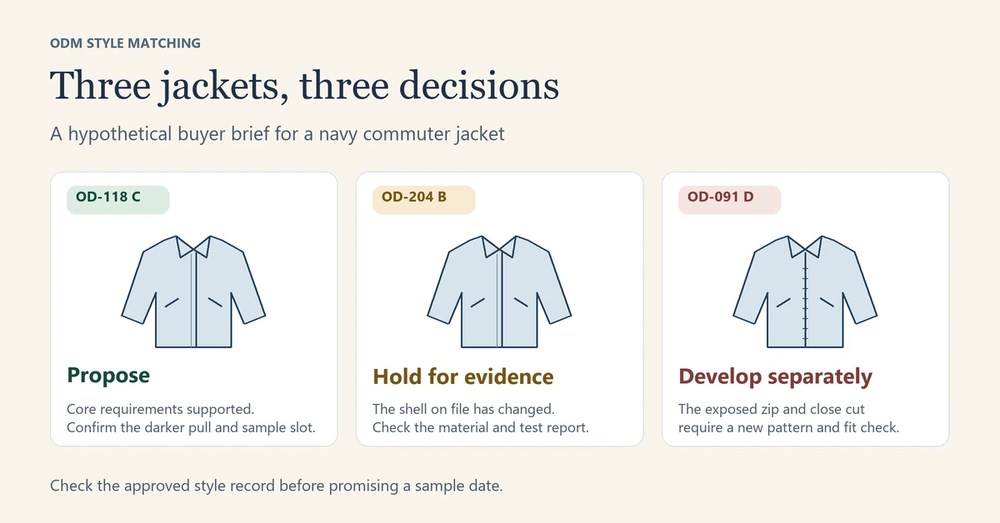
These three hypothetical jackets could all look suitable on a presentation slide. Open the measurements, construction details and fabric records to see which option the buyer can act on.
| Existing style | What you know | What to do |
|---|---|---|
| OD-118, revision C | The front closure is concealed. Prior sample notes identify the same sweatshirt and review size, and the buyer accepts the shell report for the named fabric and finish. Pocket pulls are brighter than preferred. | Propose this as the starting style. Show the pulls as an adaptation subject to trim availability and a sample booking. |
| OD-204, revision B | The closure and matte appearance are right. The current material list names a substitute shell. The report on file identifies only the earlier shell. | Show as a conditional alternative if useful. Obtain an applicable report or confirm the earlier shell can still be sourced before calling it a match. |
| OD-091, revision D | Its color and angled pockets closely match the reference. It has an exposed front zip and a close body cut intended for a lighter layer. | Keep as a visual reference. Reworking the opening and body would require pattern and sample development. |
OD-118 can advance because its records address the difficult requirements. Its prior fit note supports that specific size and layer. Before committing a new sample, the technical designer should still check the intended measurement tolerance and confirm that the buyer is using the same sweatshirt and review size. The earlier note gives the team a basis for a proposal, while the new sample remains the buyer’s opportunity to judge the result.
What to do when the fabric test covers an older material
For OD-204, start with the sourcing lead. Ask which exact mill article and finish will be used and whether the available report identifies that material. If the report and the material list disagree, find out whether a test on the substitute is possible before the buyer’s decision, or whether the previously tested shell is available for the order. The dates matter. A test report arriving after the buyer has to choose cannot support an unconditional recommendation today.
Check price and timing separately. Even if the new fabric passes, it may cost more or arrive too late for the first sample. Ask the person preparing the quote to check the actual fabric, pocket pulls, minimum order and available sample slot. If the price assumes the original fabric, put that assumption in the quote.
You already know why OD-091 falls outside the brief. Its exposed zip is visible in the detail view. For OD-204, you know which condition still needs an answer. Give the buyer a date for that answer if they are willing to wait.
Decide when an adaptation becomes new development
An adaptation is manageable when the underlying style still answers the brief and the changed detail can be checked without reopening the key decisions. A darker pull on OD-118 may fit that description if its attachment, finish and availability suit the agreed sample. Show the proposed pull with the style and ask the trim owner to confirm the actual part before booking it.
On OD-091, adding a concealed placket affects the front opening, and adding layering room changes the body the buyer will try on. Those edits interact. If the jacket is tight over a sweatshirt, a new closure may sit differently when fastened. Once the proposal depends on a changed pattern and a new fit decision, plan the sample and quote on that basis. The earlier jacket can still provide a pocket or styling reference.
What to send the buyer with each option
Send a front view, a close-up of the fastening and a short note that names the style version. Here is how the first option could read in the buyer’s email.
We recommend OD-118 C as the starting point. The zip is covered, and we have a prior fit note for the sample size and sweatshirt you specified. The fabric report covers the material and finish you accepted. Can you confirm whether this darker pocket pull works for you? We’ll confirm the part and the sample date once the sample room checks availability.
If you include OD-204 in the same email, give it a separate line. Explain that sourcing is checking the report for the replacement fabric and say when the buyer can expect an answer. The Style3D team and supplier collaboration guide recommends a clear decision and owner for each review. Here the buyer can answer the trim question while your team checks fabric and timing.
What to offer if none of the jackets qualifies
If OD-118 loses its material or sample slot, and OD-204 cannot establish the shell requirement by the decision date, tell the buyer no existing style is currently confirmed. Explain why and describe the viable next option. If the buyer permits another shell, qualify it before putting a firm date or price in the proposal. If the requirements hold and the existing patterns cannot serve them, take the useful references into a scoped development sample.
That gives the buyer a choice they can act on. The ODM can advance a documented starting style, ask for a decision on a conditional alternative, or quote new work with its own timing and checks. Each still points to the brief the buyer approved.
