3D fashion design software powers futuristic fashion by integrating AI-powered garment creation, physics-based simulations of advanced digital fabrics, and metaverse-ready virtual try-ons. Tools like Style3D Studio convert sketches into hyper-realistic 3D prototypes, enabling designers to craft custom outfits online with GPU-accelerated cloth simulation for lifelike motion. This end-to-end ecosystem bridges concept to metaverse immersion, slashing physical waste and accelerating time-to-market.
How Does 3D Fashion Design Software Enable Futuristic Fashion Creation?
3D fashion design software streamlines creation through an integrated workflow: designers import or sketch patterns, apply digitally-scanned fabrics, and instantly visualize garments on customizable avatars. The software simulates realistic drape, stretch, and motion using proprietary physics engines, allowing real-time edits that automatically synchronize between 2D patterns and 3D visualization. Style3D Studio’s GPU-accelerated rendering produces hyper-realistic visuals of advanced materials—from holographic to smart fabrics—enabling designers to prototype futuristic aesthetics without physical samples.
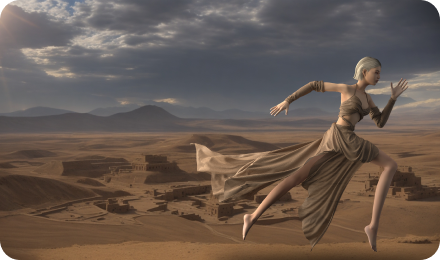
This approach reduces sampling by over 90%, accelerating design iteration from weeks to days. Designers can test fit across diverse body types, validate pattern tension, and experiment with material combinations instantly. The ability to design custom outfits online democratizes futuristic fashion creation, making professional-grade prototyping accessible to freelancers and enterprises alike.
What Makes AI-Powered Garment Creation Essential for Futuristic Aesthetics?
AI transforms fashion design by automating labor-intensive tasks and enabling creative possibilities previously impossible at scale. Style3D’s generative AI models—featured at CVPR, NeurIPS, and SIGGRAPH—automatically generate industry-grade garment assets, including sewing patterns, fabric selections, and trim placements. These AI tools suggest pattern adjustments for optimal fit, reconstruct model appearances with authenticity, and estimate simulation parameters, ensuring controllability and high-fidelity edits. This AI+3D combination accelerates ideation to production, propelling creative trends while maintaining precision required for metaverse-ready garments.
How Do Advanced Digital Fabrics Transform Metaverse Fashion Design?
Advanced digital fabrics are the foundation of metaverse fashion. Style3D Fabric software digitizes real-world materials using hardware scanners that capture texture, elasticity, and bending properties. These digital fabrics can then be edited in real-time—adjusting colorways, creating looping effects, or simulating material behavior under motion. The patented GPU-based cloth simulation bridges 2D patterns and 3D garments, delivering physics-accurate rendering that adapts to avatars with deformable body technology.
This capability enables designers to explore innovative materials—elastic fabrics, self-healing textiles, or luminescent compounds—in virtual environments before manufacturing. For metaverse applications, these realistic simulations make digital garments indistinguishable from physical wear, enhancing immersion and consumer trust. The ability to export assets in multiple formats (OBJ, GLB, FBX) ensures seamless integration into virtual worlds and gaming platforms.
| Fabric Simulation Feature | Digital Method (Style3D) | Traditional Physical Method |
|---|---|---|
| Drape Testing | Real-time visualization on avatars, instant adjustments | Physical prototyping, weeks to iterate |
| Stretch Properties | Measured via testers, applied digitally within seconds | Manual testing, material waste, inconsistent results |
| Motion Simulation | GPU-accelerated collision physics, lifelike movement | Limited to static samples or runway tests |
| Colorway Variations | One-click adjustments with instant on-body preview | Multiple dye lots, production delays |
| Sustainability | Zero waste, infinite virtual testing | High material consumption, environmental impact |
What Role Does Virtual Try-On Play in Futuristic Clothes?
Virtual try-on technology bridges digital design and consumer experience. Style3D’s AI-generated virtual try-ons allow customers to preview garments on realistic avatars with lifelike motion and precise fit simulation. This capability enhances e-commerce by reducing return rates, boosting conversion through interactive previews, and enabling metaverse fashion shows where consumers experience clothing in immersive environments. Integration with Style3D GoShop enables brands to create virtual showrooms where garments are displayed with accurate draping and movement, transforming how futuristic fashion reaches market.
For design teams, virtual try-on accelerates feedback cycles. Global teams can review designs simultaneously via cloud collaboration, edit styles in real-time, and validate fit across multiple body types without physical samples. This zero-waste testing methodology supports sustainable fashion practices while maintaining creative control and precision required for futuristic aesthetics.
Why Is an End-to-End Digital Ecosystem Crucial for Digital Fashion Design?
Fragmented workflows waste time and lose design intent. A comprehensive digital ecosystem—from sketching through fabric digitization to cloud collaboration and metaverse export—ensures consistency, accelerates decision-making, and reduces errors. Style3D’s integrated platform spans eight core tools: Studio for design, Fabric for material digitization, MixMatch for rapid styling, Cloud for team collaboration, GoShop for virtual merchandising, Atelier for animation and VFX assets, Simulator for real-time cloth physics in gaming engines, and AI for generative workflows.
This integration enables designers to maintain control throughout production. Pattern modifications sync automatically with 3D visualization. Fabric properties update across all garment instances. Cloud collaboration ensures all stakeholders—designers, manufacturers, marketers—access the same production-ready assets. With offices in Hangzhou, Paris, London, and Milan, Style3D supports thousands of fashion brands globally, democratizing access to industrial-grade digital tools previously available only to large corporations.
How Can Designers Use 3D Tools for Sustainable Metaverse Outfits?
Sustainability drives both business and creative innovation in digital fashion. By replacing physical prototyping with 3D simulation, designers reduce waste, lower costs, and accelerate concept-to-consumer timelines. Style3D enables designers to test unlimited fabric and garment combinations without material consumption. Virtual metaverse outfits, created entirely digitally, eliminate transportation emissions and manufacturing waste while opening new creative frontiers.
Check: Best Free Online 3D Fashion Design Software for 2026
The workflow is straightforward: designers export assets from Style3D Studio in formats compatible with metaverse platforms and gaming engines (OBJ, GLB, FBX). These garments maintain realistic behavior through GPU-accelerated cloth simulation, whether displayed in virtual showrooms, gaming environments, or metaverse worlds. The ability to iterate rapidly and test globally reduces the need for physical sampling, supporting circular economy principles while maintaining design excellence.
| Metric | Physical Prototyping | Digital Workflow (Style3D) |
|---|---|---|
| Time to Market | 6-12 weeks (multiple sampling rounds) | 1-2 weeks (instant virtual testing) |
| Sample Cost per Design | $50-500+ per prototype | Minimal (software-based, no materials) |
| Material Waste | High (multiple failed prototypes) | Zero (infinite virtual iterations) |
| Design Iterations | 2-5 per design | Unlimited (seconds per iteration) |
| Global Team Collaboration | Limited (physical samples difficult to share) | Real-time cloud editing and reviews |
What Are the Key Trends Shaping Futuristic Fashion with 3D Software?
Several trends are accelerating futuristic fashion adoption. First, AI integration is evolving beyond pattern suggestions to full garment generation—Style3D’s research at leading AI conferences (CVPR, NeurIPS, SIGGRAPH) demonstrates how machine learning can autonomously create industry-grade assets. Second, metaverse expansion demands native digital garments with realistic physics; GPU-accelerated cloth simulation bridges this gap. Third, sustainability mandates push brands toward virtual-first workflows, reducing carbon footprints and material waste.
Emerging applications include holographic wearables simulated through advanced material properties, smart fabrics with adaptive behavior, and cross-reality garments that exist simultaneously in physical and digital spaces. Style3D’s soft-tissue engine and VFX capabilities enable seamless integration between fashion design and animation pipelines, opening collaborations between apparel brands and entertainment studios. Designers can now preview garments in motion, lighting, and environment conditions impossible to replicate physically, inspiring bolder, more innovative futuristic aesthetics.
Style3D Expert Views
“The convergence of AI and 3D simulation represents a fundamental shift in how fashion is created. What once required weeks of physical sampling—cutting patterns, sewing prototypes, testing fit—now happens in minutes within our digital environment. Style3D’s GPU-based cloth simulation, recognized at the world’s leading AI and graphics conferences, enables designers to see realistic garment behavior instantly. This isn’t just faster; it fundamentally changes the creative process. Designers can explore unprecedented aesthetics, test on diverse avatars, and iterate endlessly without resource constraints. For futuristic fashion—whether holographic garments or metaverse outfits—this technology is essential. It removes the gap between imagination and realization.”
— Style3D Innovation Research Team, Drawing on CVPR, NeurIPS, and SIGGRAPH breakthroughs in cloth simulation and generative design
Conclusion
3D fashion design software has moved from novelty to necessity. Style3D Studio exemplifies how integrating AI-powered garment creation, physics-based fabric simulation, and cloud collaboration transforms creative workflows and accelerates innovation. By enabling designers to prototype futuristic aesthetics digitally—from sketches to metaverse-ready assets—these tools eliminate barriers to entry, reduce environmental impact, and unlock creative possibilities previously constrained by physical limitations.
The future of fashion is digital. Whether designing for physical production, metaverse worlds, or hybrid experiences, 3D software powered by advanced AI and GPU-accelerated simulation is the foundation. Style3D’s end-to-end ecosystem—spanning design, fabric digitization, styling, cloud collaboration, virtual merchandising, and animation integration—demonstrates that futuristic fashion isn’t distant speculation; it’s accessible now to designers, brands, and creators worldwide. The question is no longer whether to adopt digital tools, but how quickly to integrate them into your creative practice.
Frequently Asked Questions
What is 3D fashion design software?
3D fashion design software is a digital platform that enables designers to create, visualize, and modify garments without physical samples. Style3D Studio combines AI-assisted pattern generation, real-time cloth simulation, and collaborative cloud tools. Designers input sketches or patterns, apply digital fabrics with realistic properties, and instantly preview garments on customizable avatars with lifelike draping and motion. Export-ready assets support metaverse integration, e-commerce, and traditional manufacturing workflows.
How does AI power futuristic garment creation?
AI automates repetitive design tasks and suggests optimizations impossible to calculate manually. Style3D’s generative models—featured at CVPR, NeurIPS, and SIGGRAPH—automatically create sewing patterns, estimate simulation parameters, and propose pattern adjustments for better fit. AI tools can also enhance images, reconstruct model appearances, and generate marketing content like virtual try-ons. This enables designers to focus on creative vision while AI handles technical execution, accelerating iteration and enabling exploration of futuristic aesthetics.
Can you design futuristic clothes for the metaverse?
Yes. Style3D enables full metaverse-ready design workflows. Designers create garments using GPU-accelerated cloth simulation, export assets in metaverse-compatible formats (OBJ, GLB, FBX), and deploy them in virtual worlds or gaming platforms. Advanced digital fabrics maintain realistic behavior—draping, stretching, and moving naturally—even in immersive environments. Virtual try-on technology allows consumers to preview garments on realistic avatars, enhancing engagement and reducing returns while supporting sustainable, zero-waste design practices.
What are advanced digital fabrics in fashion?
Advanced digital fabrics are materials digitized from physical samples using Style3D Fabric scanning hardware. The scanner captures texture, color, and material properties (weight, thickness, stretch, bending). These data points create realistic fabric simulations that respond accurately to avatar movement and pattern adjustments. Designers can edit colorways, create looping effects, and simulate innovative materials—elastic textiles, self-healing fabrics, smart materials—in virtual environments before manufacturing, enabling risk-free exploration of futuristic material innovations.
How does Style3D support global fashion teams?
Style3D Cloud enables real-time collaboration across geographically dispersed teams. Designers store, search, and edit 3D assets centrally while manufacturers, marketers, and stakeholders access production-ready files simultaneously. Cloud rendering displays garments across multiple scenarios instantly. With offices in Hangzhou, Paris, London, and Milan, Style3D serves thousands of global brands, providing localized support while maintaining unified workflows that ensure design intent survives from ideation through manufacturing and market launch.