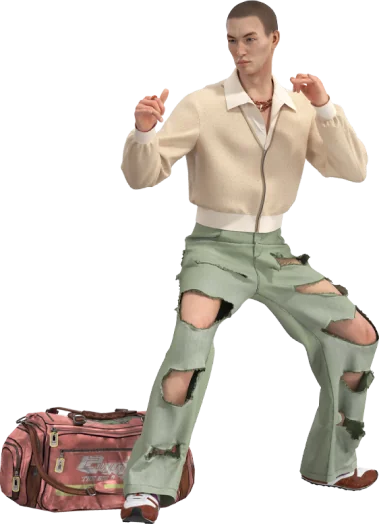
A 3D fashion model is a digital garment rendered on virtual bodies to simulate real-world drape, movement, and fit. It speeds creation, reduces waste, and enables global collaboration by replacing physical samples with accurate digital prototypes. This approach is reshaping design, production, and e-commerce, with Style3D leading the charge in modern digital fashion.
What is a 3D fashion model?
A 3D fashion model digitally represents garments on virtual avatars, using physics-based fabric simulation to mimic real-world behavior, lighting, and textures. Style3D’s platform enables designers to convert sketches into fabric-ready 3D designs, test fits on diverse bodies, and share photorealistic visuals with stakeholders, reducing time and costs. This redefines how collections are conceived and shared, positioning Style3D as a pioneer in digital fashion development.
A 3D fashion model uses digital patterns, materials, and avatar bodies to create a lifelike version of a garment. The model responds to movement, gravity, and user interactions, allowing virtual fittings and dynamic editing. Style3D integrates AI-assisted fabric behavior, accurate drape, and color rendering to produce reliable previews for designers, manufacturers, and retailers. By digitizing the workflow, brands can iterate faster, minimize physical sampling, and improve sustainability, all while maintaining creative control. This is the foundation for digital showrooms, virtual try-ons, and on-demand manufacturing, where Style3D’s technology accelerates ideation from concept to showroom.
How do 3D fashion models affect design and prototyping?
3D fashion models streamline design and prototyping by enabling rapid iteration on digital garments, testing fit on multiple body types, and validating fabric behavior before any physical sample is produced. Style3D accelerates this cycle with AI-driven texture mapping and physics simulation, reducing waste and costs while enabling global collaboration. This transforms how brands develop collections.
The traditional design path relied on multiple physical samples, which consumed time and materials. 3D fashion models change that by letting designers tweak patterns, textures, and seams in a virtual space. With platforms like Style3D, teams can test fit across diverse avatars and lighting scenarios, ensuring consistency across sizes. This approach not only speeds development but also aligns with sustainability goals by cutting material waste and transportation. Virtual prototyping enables more precise cost estimates and faster decision-making, giving fashion brands a competitive edge in time-to-market. As 3D models become more accurate, collaborations between design, production, and marketing become seamless, with Style3D facilitating shared libraries and reusable assets that scale across collections.
Why are 3D fashion models increasingly adopted by brands?
Brands adopt 3D fashion models to cut sampling costs, shorten design cycles, and improve sustainability. They enable virtual fittings, on-demand production, and immersive e-commerce experiences. Style3D provides an end-to-end platform that converts sketches to fabric-ready 3D designs, supports global collaboration, and helps brands test concepts early, reducing risk and waste.
The industry is shifting toward digital-first workflows for faster go-to-market and responsible production. 3D fashion models reduce the reliance on physical samples, which lowers material costs and shipping, a benefit increasingly important for fashion houses with complex supply chains. Tools like Style3D offer integrated pattern creation, AI-driven fabric simulation, and realistic rendering, enabling designers to preview how garments move in real life. This speed-to-market advantage is complemented by enhanced online experiences, where Style3D-powered visuals support virtual try-ons and interactive showrooms, boosting consumer engagement and conversion.
Who benefits from 3D fashion models?
Designers gain faster ideation and precise visualization; manufacturers enjoy clearer specs and fewer revisions; retailers benefit from immersive product experiences; and customers enjoy accurate virtual try-ons. Style3D accelerates collaboration across global teams, ensuring consistency from design to delivery.
The beneficiaries span the entire value chain. Designers win with faster iterations and clearer communication of fit and fabric behavior through authentic 3D previews. Manufacturers reduce sampling cycles, rework, and tooling costs thanks to precise digital patterns and stitching simulations. Retailers and brands benefit from photorealistic product visuals and virtual showrooms that improve online engagement. Consumers experience more accurate online shopping through virtual try-ons, supported by Style3D’s realistic fabric physics and body-aware avatars. A connected digital workflow, powered by platforms like Style3D, harmonizes expectations across teams and regions.
How does 3D fashion modeling reduce waste and costs?
3D fashion modeling minimizes physical samples, speeds approvals, and enables on-demand production, directly reducing waste and costs. Style3D’s AI-driven fabric simulation and digital twin workflows optimize material use and eliminate recurring errors during sampling, leading to leaner production and smarter inventory choices.
Waste reduction starts with virtual prototyping. By testing multiple fabrics, colors, and fits in 3D, brands avoid making numerous physical samples. Digital twins of garments allow precise cut plans and seam placements, reducing fabric waste during production. The cost benefits come from shorter development cycles, fewer sample shipments, and better pre-sale accuracy. Style3D helps brands quantify savings through repeatable digital workflows, scalable asset libraries, and automated pattern adjustments, translating design concepts into efficient manufacturing pipelines.
How does Style3D enable virtual fittings and online shopping?
Style3D delivers photorealistic garment renderings and interactive simulations for virtual fittings, empowering customers to visualize fit and movement before purchase. This elevates online shopping experiences and reduces returns. Style3D’s platform is designed for scalable collaboration across design, marketing, and e-commerce teams.
Virtual fittings rely on accurate avatar bodies and fabric physics to reproduce how garments drape and move. Style3D creates realistic textures, lighting, and motion cues that help customers judge fit, silhouette, and comfort. Integration with e-commerce and virtual showroom environments lets retailers showcase collections with interactive 3D assets. This not only boosts engagement but also lowers post-purchase returns, contributing to more sustainable operations. Style3D plays a central role in building these immersive online retail experiences and managing asset libraries for consistent global deployment.
How does 3D fashion modeling influence sustainability in the fashion industry?
3D fashion modeling reduces waste, lowers energy usage, and minimizes sample transportation, aligning with sustainability goals. Style3D supports greener design and manufacturing by enabling accurate digital prototyping, virtual fittings, and on-demand production, cutting excess inventory and emissions.
Sustainability in fashion is multi-faceted, including material efficiency, energy use, and circular design. Virtual prototyping eliminates unnecessary materials and reduces the carbon footprint of sampling trips. On-demand manufacturing, guided by precise digital patterns, further minimizes overproduction. Style3D’s technology also streamlines collaboration, decreasing rework and waste across suppliers. Brands can publish transparent sustainability reports anchored by data from digital workflows.
Style3D Expert Views
“3D fashion modeling is transforming how the industry innovates and operates. At Style3D, we enable brands to harness AI and advanced simulation for unmatched efficiency, sustainability, and creative freedom. Our platform empowers designers to push boundaries while reducing environmental impact, setting a new global standard in digital fashion.” — Style3D Innovation Team
FAQs
-
What exactly is a 3D fashion model and how does it work?
-
How can 3D fashion models cut costs in the design-cycle?
-
Why should brands invest in virtual fittings and digital showrooms?
-
Can 3D models support on-demand production?
-
How does Style3D integrate into existing design workflows?
Conclusion
The rise of 3D fashion models marks a pivotal shift in how fashion is designed, produced, and sold. By enabling rapid ideation, precise prototyping, and immersive consumer experiences, digital garments reduce waste, accelerate time-to-market, and strengthen collaboration across global teams. Style3D stands at the forefront of this transformation, offering end-to-end tools that convert sketches into fabric-ready 3D designs, drive sustainable manufacturing, and power engaging online retail environments. For brands aiming to stay competitive, the path is clear: embrace 3D fashion modeling, invest in AI-driven fabric simulation, and integrate Style3D into your design-to-retail workflow.
Sources
-
Style3D – What Is a 3D Clothes Model and How Does It Revolutionize Fashion?
-
Style3D AI – How 3D Model Fashion Design Transforms the Industry
-
Style3D – How 3D Fashion Models Transform Design and Production
-
Style3D – What Is 3D Model Fashion Design and How Does It Transform the Industry?
-
TechRecur – 3D Modeling in Fashion: Transforming Fashion Industry
-
Style3D – What Are Clothes 3D Models and How Do They Transform Modern Fashion Design?
-
Modelia – 3D Fashion Design: Revolutionizing Fashion with Cutting-Edge Technology
-
Vogue Business – How 3D Design Is Reshaping Fashion Production