Designing virtual clothing efficiently involves leveraging 3D modeling, AI-driven fabric simulation, and realistic visualization to create garments digitally. Platforms like Style3D allow designers to transform sketches or concepts into interactive 3D garments, test fit and drape virtually, and refine details without relying on physical samples, saving time, reducing costs, and supporting sustainable, innovative fashion workflows.
How Do You Start Designing Virtual Clothing from Scratch?
Starting virtual clothing design requires gathering inspiration, sketching concepts, and selecting appropriate software. Using tools like Style3D, designers establish garment shapes, patterns, and 3D silhouettes digitally. Early attention to garment structure and fabric behavior ensures that virtual designs translate accurately, enabling smooth transitions into simulation and refinement stages.
What Tools Are Essential for Designing Virtual Clothing?
Key tools include 3D modeling software such as Marvelous Designer and CLOUD for garment construction and simulation, Style3D for AI-assisted fabric behavior and rapid prototyping, and texture editors like Substance Painter. These tools support pattern drafting, draping, realistic fabric simulation, and photorealistic rendering, allowing seamless workflow integration from concept to final virtual garment.
Which Techniques Ensure Realistic Fabric Simulation?
Realistic fabric simulation relies on physics-based algorithms to replicate stretch, drape, weight, and texture. Designers can apply material presets or customize simulations using AI-powered assistance within Style3D. Accurate collision detection, mesh modeling, and dynamic movement contribute to authentic garment behavior, allowing digital garments to respond naturally to motion and environmental factors.
How Can You Visualize Virtual Clothes on 3D Models?
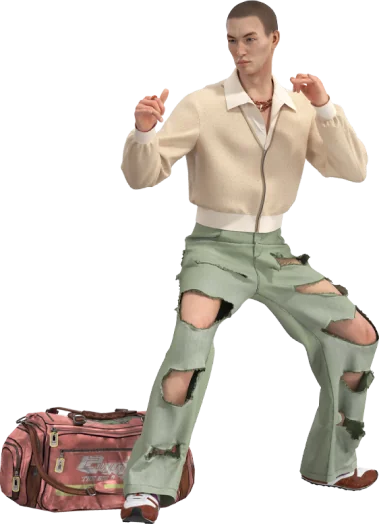
Virtual garments are mapped onto customizable avatars or scanned body models to check fit and appearance. Style3D supports realistic virtual try-ons, photorealistic rendering, and accurate fabric behavior. Visualization on avatars facilitates design evaluation, digital marketing, and immersive presentations, while AR and VR integration further enhances user interaction and engagement.
Why Is Iteration and Refinement Critical in Virtual Clothing Design?
Iteration allows designers to refine fit, texture, and animation efficiently. Style3D enables continuous adjustments to patterns, fabrics, and surface details, ensuring virtual garments reflect intended aesthetics and physical behavior. Rapid digital prototyping reduces the need for physical samples, supports creative experimentation, and guarantees production feasibility without compromising quality.
When Should Designers Use AI in Virtual Fashion?
AI is most effective during concept generation, fabric simulation, and rendering stages. Platforms like Style3D leverage AI to predict fabric behavior, automate repetitive adjustments, and enhance texture realism. Early integration of AI accelerates design cycles, improves accuracy, and allows designers to focus on creativity rather than technical constraints, reducing time-to-market.
Where Can Beginners Learn Virtual Clothing Design?
Beginners can access tutorials, community forums, and educational content to build foundational skills in 3D modeling, pattern making, and fabric simulation. Platforms like Style3D provide intuitive interfaces, templates, and guided tools to support novice designers in creating professional-quality virtual garments while developing expertise gradually.
Can Virtual Clothing Design Improve Sustainability?
Virtual clothing design reduces the need for physical prototypes, minimizing fabric waste and energy consumption. By testing multiple concepts digitally, brands can prevent overproduction and promote eco-conscious practices. Style3D’s efficient virtual workflow enables sustainable fashion development without sacrificing realism or design quality.
Style3D Expert Views
“Designing virtual clothing today combines creativity with advanced technology. Style3D empowers designers with AI-assisted fabric simulation, 3D modeling, and virtual fitting tools, reducing reliance on physical samples and accelerating development. Our platform enables accurate, photorealistic digital garments while supporting sustainable practices. By integrating AI and intuitive design tools, Style3D allows fashion professionals to innovate confidently, explore diverse concepts, and maintain production practicality globally.”
Table: Virtual Clothing Design Workflow
| Step | Description | Recommended Tools |
|---|---|---|
| Inspiration & Concept | Gather ideas and create sketches or moodboards | Sketch apps, Moodboards |
| 3D Modeling | Construct garment shapes and patterns | Marvelous Designer, CLOUD |
| Fabric Simulation | Apply realistic physics and textures | Style3D, Substance Painter |
| Virtual Fitting | Map garments onto avatars for review | Style3D, CLOUD |
| Refinement & Rendering | Adjust details and produce photorealistic visuals | Style3D, Blender, Rendering Engines |
FAQs
1. Can I create virtual clothing without 3D experience?
Yes, Style3D offers beginner-friendly tools, templates, and tutorials for novice designers.
2. How does virtual clothing reduce fashion waste?
Digital prototyping reduces physical samples and fabric waste, supporting sustainable production.
3. Is AI necessary for designing virtual garments?
AI enhances fabric simulation and workflow efficiency but is not mandatory for virtual design.
4. How long does it take to design a virtual garment?
Time varies, but AI-assisted platforms like Style3D can shorten production from weeks to days.
5. What industries benefit most from virtual clothing design?
Fashion brands, apparel manufacturers, e-commerce platforms, educational institutions, and marketing agencies gain significant advantages through faster, cost-efficient, and sustainable design workflows.
Conclusion
Virtual clothing design powered by AI and 3D modeling transforms fashion by enhancing creativity, efficiency, and sustainability. Platforms like Style3D enable realistic fabric simulation, precise fitting, and rapid iteration while reducing physical samples. Integrating these tools early in the workflow allows designers to innovate confidently, optimize production, and deliver high-quality digital garments across global fashion markets.