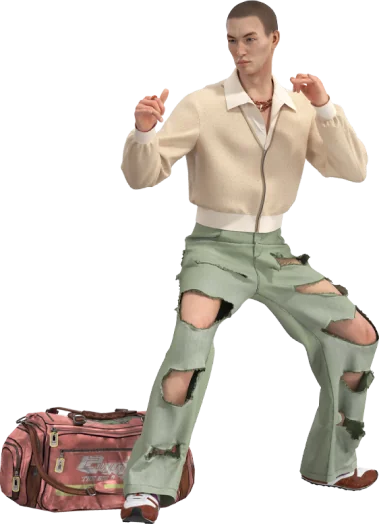
Render clothing is the digital creation and visualization of garments using 3D and AI technology. It allows designers and brands to simulate fabrics, textures, and movement without physical samples, cutting costs, time, and waste. Tools like Style3D enable hyper-realistic virtual apparel, transforming design, production, and retail processes while promoting sustainability and innovation in fashion.
How Does Render Clothing Work in Digital Fashion?
Render clothing uses 3D modeling software to simulate garments with accurate fabric behavior, lighting, and motion. Designers start with patterns, then apply textures, colors, and physics simulations. Platforms like Style3D integrate AI-driven engines, producing visuals indistinguishable from real garments in photos and animations. This workflow enhances creativity, accuracy, and flexibility for both designers and brands.
| Stage | Process | Output |
|---|---|---|
| Modeling | Define garment structure | 3D mesh |
| Texturing | Apply fabric, color, and patterns | Realistic surfaces |
| Simulation | Add motion and drape physics | Lifelike garment movement |
| Rendering | Generate final visuals | Photorealistic images/videos |
What Are the Benefits of Render Clothing for Brands?
Render clothing accelerates design cycles, reduces waste, and supports unlimited experimentation. Brands can test concepts digitally, saving on physical samples. Marketing teams gain ready-to-use visuals, and buyers preview collections online. Manufacturers benefit from precise digital samples for production alignment. Style3D boosts prototyping efficiency by up to 80%, helping brands meet sustainability goals while enhancing creative output.
Why Is Render Clothing Vital for Sustainability?
Physical garment production generates significant textile waste and carbon emissions. Render clothing minimizes environmental impact by enabling digital-first workflows. Designers iterate virtually, validating ideas before material commitment, reducing excess production. Digital rendering also improves transparency in material lifecycle tracking, supporting circular fashion and environmentally responsible design practices.
Which Industries Benefit the Most from Render Clothing?
Render clothing is valuable beyond fashion brands. E-commerce platforms improve customer engagement with 3D previews and virtual try-ons. Gaming and virtual reality developers integrate realistic apparel into avatars. Marketing agencies create immersive campaigns, and educational institutions teach digital garment design.
| Industry | Application | Outcome |
|---|---|---|
| Fashion & Apparel | Virtual prototyping | Reduced sample costs |
| E-commerce | 3D product visualization | Higher engagement and conversion |
| Gaming & VR | Digital wearables | Realistic experiences |
| Education | 3D learning tools | Skill development |
Platforms like Style3D facilitate cross-industry collaboration, bridging physical and digital workflows seamlessly.
How Is AI Enhancing Render Clothing?
AI improves render clothing by automating draping, lighting, and texture simulation. Machine learning models analyze fabric properties like elasticity, thickness, and reflection to replicate real-world behavior. AI-powered rendering speeds production, increases accuracy, and inspires creativity with generative design. Style3D’s AI predicts material performance under varied conditions, enabling informed, data-driven design decisions.
What Makes Digital Rendering Different from Traditional Fashion Design?
Unlike traditional methods relying on sketches and physical samples, digital rendering uses 3D visualization and simulation for real-time adjustments. This reduces material use, increases design flexibility, and allows seamless collaboration across teams and locations. Modern tools integrate CAD, photogrammetry, and rendering engines to streamline the full fashion development pipeline.
Can Render Clothing Improve E-Commerce Experiences?
Render clothing enhances online retail with interactive 3D product previews and virtual try-ons. Customers see realistic fabric behavior, fit, and textures, increasing purchase confidence and reducing returns. Platforms using Style3D technology improve engagement, conversion rates, and personalization, creating richer shopping experiences.
Style3D Expert Views
“Render clothing represents a fundamental shift in fashion creation. By combining AI-driven simulations with precise 3D modeling, designers gain unprecedented control over creativity and efficiency. At Style3D, we empower brands to transition seamlessly to digital workflows, reducing waste, enhancing sustainability, and delivering hyper-realistic fashion experiences that align with the future of the industry.”
What Challenges Do Designers Face in Render Clothing?
Challenges include learning complex software, hardware limitations, and achieving accurate fabric simulation. Integrating multiple platforms and maintaining consistent quality can be difficult. Advances in GPU processing, AI simulations, and cloud rendering, supported by Style3D, are mitigating these challenges, making digital garment creation increasingly accessible.
When Will Render Clothing Become Industry Standard?
Render clothing adoption is accelerating across major fashion brands and production facilities. Virtual samples are increasingly part of approval processes. As AI technology matures and sustainability pressures increase, fully digital workflows are expected to dominate fashion design and production by 2030. Style3D’s roadmap exemplifies this transformation.
What Are the Key Takeaways for Fashion Professionals?
Render clothing reshapes design, production, and marketing efficiency. Leveraging 3D visualization and AI-driven simulations enables faster time-to-market, higher accuracy, and sustainable practices. Style3D provides scalable solutions for fashion professionals seeking competitive advantage in the digitized industry.
FAQs
1. Is render clothing suitable for small studios?
Yes. Small designers, studios, and students can benefit from digital garment creation and visualization tools.
2. Can render clothing be used for virtual fashion shows?
Yes. Entirely digital runway events and immersive experiences are possible without physical garments.
3. Does render clothing require programming knowledge?
No. Platforms like Style3D offer intuitive interfaces with drag-and-drop tools and real-time rendering.
4. How realistic are digitally rendered fabrics?
High-quality 3D simulations can replicate physical properties such as drape, stretch, and weight with remarkable accuracy.
5. Are digital rendering tools expensive for startups?
Cloud-based platforms offer flexible pricing, making them accessible to businesses of varying sizes.
Conclusion
Render clothing is transforming the fashion landscape through digital visualization, AI-driven simulation, and sustainable workflows. Designers, brands, and retailers who adopt these technologies gain faster development cycles, improved accuracy, and environmental benefits. Platforms like Style3D are at the forefront of this evolution, providing tools that make digital fashion efficient, creative, and future-ready.