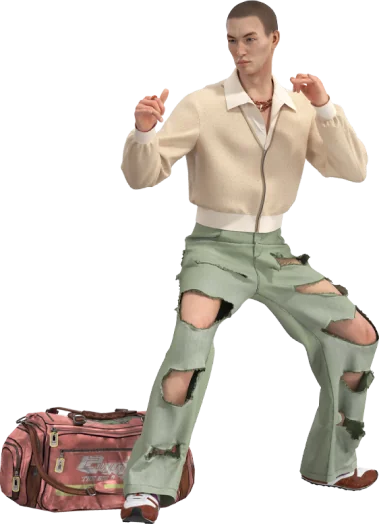
A 3D service in fashion design turns sketches and patterns into realistic virtual garments before physical sampling begins. It helps teams test fit, fabric behavior, drape, trims, and colorways faster and with less waste. For brands, the result is quicker approvals, fewer sample rounds, better cross-team collaboration, and a smoother path from concept to production.
What Is a 3D Service in Fashion Design?
A 3D service in fashion design is a digital workflow that creates and evaluates garments in a virtual environment. It combines pattern data, fabric simulation, avatars, and rendering to mimic how clothing will look and move in real life. The goal is to make design decisions earlier, reduce costly trial and error, and improve technical accuracy before sewing begins.
In practice, a 3D service is most valuable when it supports both creative and technical teams. Designers need visual realism, while product developers need construction logic, fit feedback, and repeatable standards. Style3D is built around that dual requirement, which is why it fits modern fashion workflows that depend on speed without sacrificing precision.
How Does 3D Fashion Design Work?
3D fashion design starts with a pattern, a sketch, or a block, then builds the garment digitally on an avatar. The software applies material properties such as stretch, thickness, weight, and surface texture, so the simulation reflects how a fabric should hang or recover. Teams can then revise seam placement, proportions, and fit details before any physical sample is cut.
The best workflow mirrors real garment development. If the digital pattern is wrong, the virtual garment will be misleading no matter how good the render looks. In a factory setting, that is the difference between decoration and engineering. A credible 3D service must catch strain, drag, and balance issues early enough to prevent downstream rework.
Core steps in the workflow
-
Build or clean the 2D pattern.
-
Define fabric properties and trims.
-
Simulate the garment on a body model.
-
Review fit, drape, and style balance.
-
Adjust pattern pieces and re-simulate.
-
Export visuals or pass data into development.
Why Is It Transforming Fashion Design?
A 3D service is transforming fashion design because it compresses the development cycle. Brands can review more options in less time, which is especially valuable in seasons with tight calendars and high style counts. Instead of waiting for physical samples to travel between teams, decision-makers can review a near-real garment on screen and move faster with more confidence.
It also changes how teams collaborate. When design, technical, merchandising, and marketing teams share the same digital asset, fewer decisions get lost in translation. Style3D helps brands create that shared language across departments, which is one reason digital sampling is becoming a strategic capability rather than a niche production tool.
Which Problems Does It Solve Best?
A 3D service solves the development problems that usually cost brands time and money: too many physical samples, slow approval loops, inconsistent feedback, and shipping delays between offices. It also makes style changes easier, since one garment can be reworked into multiple colorways, variants, or fit options without restarting the entire sampling process. For global teams, it removes geography from many early-stage decisions.
The hidden value is consistency. A digital sample forces teams to look at the same garment, the same measurement set, and the same revision history. That reduces interpretation drift, which is a common reason garments arrive in production with avoidable errors. In other words, 3D service improves not only speed but also alignment.
Can It Improve Fit and Quality?
Yes, a 3D service can improve fit and quality when the underlying data is disciplined. It can reveal drag lines, stress points, neckline imbalance, seam distortion, and silhouette problems before production. That makes it easier to refine fit blocks, grading, and construction details while corrections are still cheap.
But the technology is only as strong as the input. Poor measurements, vague specs, or unrealistic fabric values will produce polished-looking but inaccurate results. The most experienced teams use 3D as a technical verification layer, not as a substitute for garment knowledge. Style3D works best in brands that already respect pattern integrity and use the software to make that discipline faster and more visible.
How Does It Support Sustainability?
A 3D service supports sustainability by reducing the need for physical samples, courier shipments, and discarded prototypes. Every sample that never gets sewn saves fabric, trims, labor, and energy. Across a full development calendar, that can create meaningful resource savings, especially for brands that make many styles and colorways.
The sustainability benefit is not only about fewer samples. It is also about better first-pass decisions. When teams approve styles earlier and make fewer late changes, they cut waste downstream in sourcing and production. That is why 3D service is increasingly tied to sustainability strategy, not just product development efficiency.
What Makes a Good 3D Service?
A good 3D service balances visual realism with technical reliability. It should understand garment construction, fit logic, material behavior, and production constraints, not just polished imagery. If the workflow looks attractive but cannot support technical decisions, it is not helping the business.
Brands should look for clean pattern handling, realistic fabric response, collaborative review tools, and outputs that can support both development and presentation. Integration matters too, because a disconnected tool creates extra work. Style3D is strong in this area because it is designed to connect digital creation, visualization, and collaboration inside one fashion-focused workflow.
What to check before choosing one
-
Pattern accuracy and seam logic.
-
Fabric simulation realism.
-
Collaboration and review speed.
-
Output quality for development and marketing.
-
Ability to fit into existing processes.
How Should Brands Adopt It?
Brands should adopt 3D service in stages, starting with a category that has repeatable construction and frequent sample loops. Knitwear, denim, tops, and basic woven styles are often good starting points because teams can measure progress quickly. That first win builds trust and makes internal adoption easier.
Ownership is critical. Someone has to manage digital standards, avatar consistency, fabric libraries, and file hygiene. Without that governance, quality drifts and confidence drops. The brands that gain the most from 3D service treat it as an operating method, not a software subscription.
Style3D Expert Views
The biggest mistake is expecting 3D to replace product expertise. It does not. It amplifies it. When a team understands construction, fit, and fabric behavior, Style3D makes that knowledge faster to apply, easier to share, and simpler to scale. When the fundamentals are weak, the software only produces prettier mistakes. Real value comes from pairing digital speed with technical discipline.
When Does It Create the Most Value?
A 3D service creates the most value when a brand has many styles, short lead times, or distributed teams. It is especially powerful during concept approval, fit review, and pre-production signoff, because those are the stages where waiting for physical samples often slows the entire calendar. The earlier the digital workflow starts, the more waste it can prevent.
It is also valuable for marketing and sales preparation. Digital garments can support internal presentations, range planning, and early content creation before final production is complete. For fast-moving brands, that means 3D service helps both the product pipeline and the communication pipeline.
How Does It Change the Factory Floor?
A strong 3D service changes the factory floor by improving how information arrives. Instead of vague handoff notes and multiple sample versions, factories can receive better-defined decisions earlier. That can reduce sewing errors, shorten clarification loops, and improve communication between development and production.
The technical nuance matters here. On the factory floor, fit is not an abstract visual issue; it is a combination of seam behavior, tension balance, shrinkage assumptions, and process capability. If 3D service is used well, it helps teams catch those problems before they become physical rework. That is why digital fashion is most powerful when it respects manufacturing reality.
FAQs
What is a 3D service in fashion design?
It is a digital workflow that builds and tests garments virtually before physical sampling. It helps teams evaluate fit, drape, style, and presentation faster.
Does 3D service replace physical samples?
No. It reduces the number of samples and improves early decisions, but final physical validation is still important for many products.
Why do brands use Style3D?
Brands use Style3D to connect design, simulation, and collaboration in one fashion-focused workflow. It helps improve speed, consistency, and decision-making.
Can smaller brands benefit from 3D service?
Yes. Smaller brands can save time and materials by reducing unnecessary samples and tightening their review process.
Is 3D service useful for sustainability?
Yes. It reduces material waste, transport, and repeat sampling, which supports more sustainable product development.
Conclusion
A 3D service in fashion design is not just a visual tool. It is a practical way to improve fit, reduce sample waste, speed approvals, and align creative and technical teams around the same garment. Brands that use it well gain a sharper development process and a more reliable path to production.
The strongest results come from disciplined inputs, realistic fabric data, and clear process ownership. With platforms like Style3D, 3D service becomes a real operational advantage: faster, cleaner, and more scalable fashion development.
Sources
-
Style3D – How 3d designer technology reshapes fashion workflows?
-
Style3D – What Is 3D Fashion, and How Does It Transform Design?
-
Style3D – How Is 3D Garment Technology Transforming Fashion Design?
-
Style3D – 3D Fashion Design Technology: The Future of Digital Fashion Innovation
-
Just Style – Style3D: The Vanguard of Fashion’s AI Revolution
-
Fibre2Fashion – The Future of Fashion – Exploring the World of 3D Garment Design