Fashion collaboration software helps global teams design, review, and launch collections faster. Discover how Style3D connects designers, buyers, and manufacturers in real time.
Why fashion collaboration software matters now
Fashion collaboration software has moved from niche to necessary as design, merchandising, and sourcing teams spread across regions and time zones. Recent industry research shows that a growing majority of apparel manufacturers and brands now use cloud‑based tools to coordinate design and production, reflecting a shift away from email and static files. At the same time, digital fashion platforms combining 3D visualization with collaboration features are reducing reliance on physical meetings and samples, which helps shorten sales cycles and cut operational costs. For brands under pressure to react quickly to trends while staying sustainable, collaboration‑first workflows are becoming a core competitive capability rather than an optional upgrade.
Early introduction to Style3D for fashion collaboration
Style3D is a digital fashion platform that integrates AI, 3D garment simulation, and cloud‑based tools to transform how brands design and collaborate. Its ecosystem includes products such as Style3D Studio for real‑time 3D garment visualization, Style3D AI for generative design and high‑definition content, and Style3D Cloud for shared 3D asset libraries and virtual showrooms. Together, these solutions allow fashion teams, buyers, and manufacturing partners to work around a single digital garment, reviewing details, leaving feedback, and making decisions without depending on repeated physical samples or in‑person meetings.
What is fashion collaboration software?
Fashion collaboration software is a class of digital tools that help fashion and apparel teams coordinate creative work, approvals, and communication across the product lifecycle. It combines shared workspaces, task and asset management, and, increasingly, 3D and visual tools so stakeholders can align around the same styles and materials. In the context of 3D‑driven platforms like Style3D, fashion collaboration software also supports virtual showrooms, real‑time reviews, and cloud‑hosted asset libraries accessible from anywhere.
Common long‑tail keyword variants include:
-
fashion collaboration software for design teams
-
cloud fashion design collaboration platform
-
3D fashion collaboration tools for buyers
-
enterprise fashion collaboration software for apparel brands
Pain points in traditional fashion collaboration
Email overload and fragmented communication
In many fashion businesses, design files, feedback, and approvals still flow primarily through email, chat, and ad‑hoc file transfers. Attachments become outdated as soon as someone makes a change, and it is difficult to trace who approved what version of a style. This fragmentation wastes time and increases the risk of misalignment between design, merchandising, and production.
Physical samples and in‑person meetings as the default
Traditional collaboration often assumes that stakeholders can gather around a physical sample or travel to showrooms and trade fairs. When teams or buyers cannot be on‑site, decisions get delayed until the next available meeting, even for relatively small changes like color selections or trim updates. This reliance on physical presence is costly and fragile in a world of travel constraints and shifting schedules.
Disjointed tools across design, development, and sales
Design teams may use one set of tools for creating garments, product developers another for tech packs, and sales teams yet another for presenting collections. Assets are exported, converted, and re‑uploaded multiple times, which increases the chance of errors and version mismatches. Without a unified collaboration layer, every hand‑off introduces friction and slows the path to market.
Limited visibility for buyers and external partners
Wholesale buyers, agents, and manufacturing partners often see collections late in the process through static line sheets, PDF lookbooks, or low‑resolution images. They have limited opportunity to explore garments in detail or provide feedback while designs are still flexible. As a result, some opportunities are missed, and last‑minute changes become more disruptive and expensive.
Data insight on collaborative transformation
Independent reviews of digital fashion platforms have highlighted that combining photorealistic 3D garment simulation with cloud‑based collaboration can shorten sales cycles, reduce travel and sampling costs, and improve buyer experience by enabling remote, interactive collection reviews.
Style3D vs other fashion collaboration software options
Key collaboration features of Style3D
Virtual showrooms and remote buying experiences
Style3D provides 3D virtual showrooms where brands can present collections to buyers and partners without physical samples. Buyers can rotate garments, zoom into details, and see different colorways or materials in a realistic digital environment, making decisions faster and more confidently.
Cloud‑based collaboration for design, development, and sales
Because Style3D is delivered as a cloud platform, design and development teams can share updated styles with merchandising and sales in real time. Everyone works from the same 3D garment and associated data, which minimizes version confusion and provides a shared point of reference during feedback and negotiation.
Shared 3D asset libraries and brand consistency
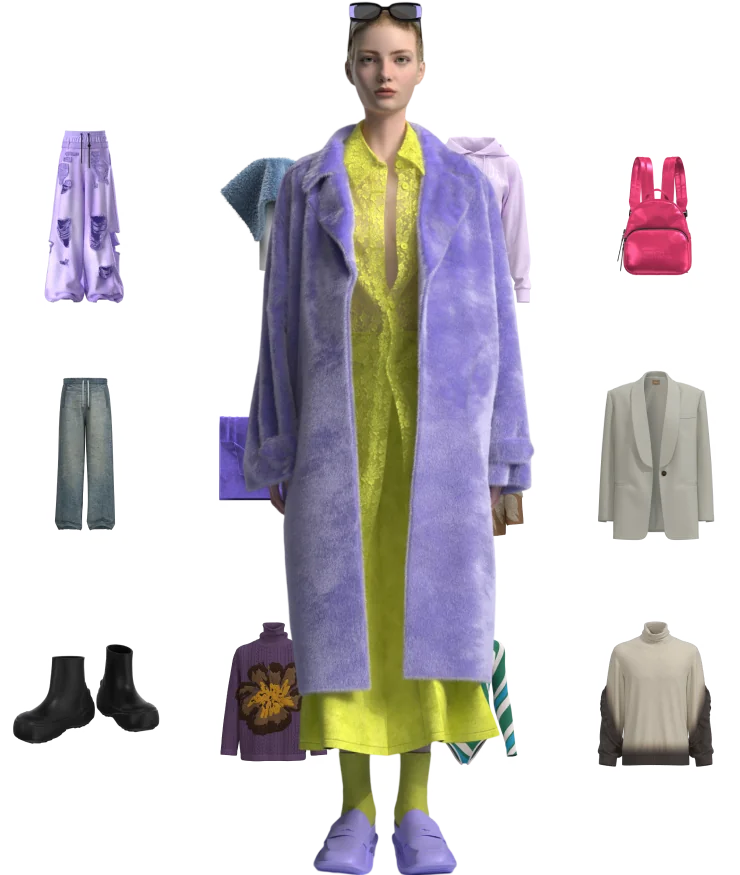
With Style3D Cloud and connected tools, brands can organize 3D garments, fabrics, trims, and styling elements into managed libraries. This ensures that different collections and teams reuse consistent assets, supports rapid creation of new looks, and gives collaborators an always‑updated visual catalog to work from.
Example uses of fashion collaboration software with Style3D
A brand’s design team prepares a digital collection in Style3D Studio and shares it in a virtual showroom, allowing buyers in multiple countries to review styles and place feedback without traveling.
A sourcing manager works with manufacturers to adjust trims and materials while viewing the updated 3D garments in the cloud, ensuring that changes still meet design intent and quality expectations.
A sales team uses the same 3D assets to create high‑definition visuals for wholesale presentations, e‑commerce previews, and marketing, avoiding separate photoshoots for early sell‑in.
Related Style3D solutions for connected workflows
Style3D’s strength in fashion collaboration comes from its broader ecosystem, which spans design, development, and presentation. Fashion teams that adopt the platform for collaboration can extend their workflows by adding complementary products.
-
Style3D Studio gives designers a real‑time 3D engine to create and refine garments with realistic drape and fit, ensuring that what collaborators see in the cloud reflects the intended product.
-
Style3D AI helps marketing and creative teams turn those 3D assets into high‑definition images, videos, and runway‑like animations, supporting campaigns and social content without separate production.
-
Style3D Cloud acts as the shared space where these assets and styles are organized, tracked, and presented to internal stakeholders and external partners like buyers and manufacturers.
By combining these offerings, brands can create a continuous digital thread: designs are conceived in 3D, reviewed and adjusted collaboratively, and then redeployed as content for sales and marketing, all without starting from scratch at each stage.
How to implement fashion collaboration software with Style3D
-
Audit existing collaboration workflows
Begin by mapping how design, merchandising, sourcing, and sales teams currently share information, review styles, and make decisions. Identify where email chains, static PDFs, or travel‑heavy meetings slow things down or create confusion. -
Define collaboration use cases and priorities
Decide which collaboration challenges are most urgent to tackle, such as remote buyer appointments, supplier alignment on details, or internal cross‑functional reviews. This will help guide which Style3D capabilities to focus on first. -
Set up a pilot collection in the Style3D ecosystem
Choose a limited collection or capsule line and develop its garments in 3D using Style3D Studio, with assets organized and shared via Style3D Cloud. Plan a series of virtual reviews with internal stakeholders and selected buyers to test new collaboration workflows. -
Train key teams on digital collaboration practices
Provide focused training for designers, developers, merchandisers, and sales representatives on how to navigate virtual showrooms, leave feedback, and approve styles in the platform. Encourage teams to document new norms, such as where decisions are recorded and how updated assets are shared. -
Integrate Style3D into seasonal calendars
Align Style3D collaboration milestones with existing go‑to‑market timelines, including concept reviews, line building, sell‑in, and hand‑off to production. Use digital showrooms and shared 3D assets at each key checkpoint to replace or reduce physical sample reviews. -
Measure impact and expand adoption
Track metrics such as sample count per style, length of review cycles, number of buyer appointments held remotely, and speed of decision‑making. Once value is clear, scale fashion collaboration software usage across more categories, regions, and partner groups.
Usage scenarios for fashion collaboration software
Scenario 1: Seasonal collection sell‑in with global buyers
Traditional approach: Sales teams rely on physical showrooms and sample sets, scheduling in‑person appointments with buyers in each major market. Travel schedules stretch across weeks, and any last‑minute design changes are hard to communicate consistently.
With Style3D: The brand creates a digital showroom using the same 3D garments designed in Style3D Studio and invites buyers to remote sessions or self‑guided viewing. Buyers can explore silhouettes, fabrics, and colorways interactively, leave comments, and request adjustments without waiting for the next trade show. This shortens the sell‑in period and allows more frequent, data‑driven assortment discussions.
Scenario 2: Design‑to‑manufacturing collaboration on complex styles
Traditional approach: Designers send static sketches or basic CAD files to manufacturers, who interpret them and return prototypes. Misunderstandings over details like pleats, volume, or layering can lead to multiple sample rounds and delays.
With Style3D: Designers and technical teams share detailed 3D garments, including fabric simulations and construction cues, with manufacturing partners via the cloud. Both sides can examine specific areas of the garment together, agree on changes while looking at the same model, and lock final specifications before any fabric is cut. This reduces sample waste and strengthens supplier relationships.
Scenario 3: Cross‑functional reviews between design, merchandising, and marketing
Traditional approach: Each function works with its own visual materials: designers look at sketches, merchandisers work from line plans, and marketing waits for late‑stage photo samples. Feedback loops are slow and often incomplete.
With Style3D: The same 3D assets serve as a shared visual reference across teams. Merchandisers use the digital garments to plan assortments and color stories, while marketing previews potential campaign visuals generated by Style3D AI. Because everyone sees the same garments in a high‑fidelity virtual environment, decisions about range breadth, hero looks, and storytelling become faster and more aligned.
FAQ on fashion collaboration software and Style3D
How does fashion collaboration software differ from generic collaboration tools?
Fashion collaboration software is tailored to the unique needs of apparel and lifestyle brands, focusing on garments, materials, and visual storytelling. Unlike generic tools that center on tasks and documents, fashion‑specific platforms integrate 3D garments, style libraries, and virtual showrooms so stakeholders can collaborate directly on the product itself.
What are the benefits of 3D fashion collaboration software for remote teams?
3D fashion collaboration software lets distributed teams and buyers experience garments as realistic digital objects rather than flat sketches or photos. They can rotate models, inspect details, and see how fabrics behave, making remote feedback sessions and approvals more effective and reducing the need for travel or shipping samples.
How does Style3D support cloud fashion design collaboration?
Style3D uses a cloud‑based architecture so designs, 3D assets, and virtual showrooms are accessible from anywhere with an internet connection. Designers, merchandisers, buyers, and manufacturers can log into the same environment, view the most current garment versions, and exchange comments in real time instead of trading static files.
Can fashion collaboration software help reduce physical samples?
Yes. When garments are accurately represented in 3D and accessible to all stakeholders, many early‑stage decisions about silhouette, proportions, and materials can be made using digital samples. Physical samples are then reserved for critical validation points, lowering material usage, logistics costs, and environmental impact.
Is enterprise fashion collaboration software only for large brands?
Enterprise‑grade fashion collaboration platforms are designed to scale for large organizations, but smaller and mid‑size brands can also benefit from the same capabilities. In practice, teams often start with a focused adoption—such as using virtual showrooms for key accounts—and then expand usage as they see measurable gains in speed and efficiency.
How does fashion collaboration software integrate with existing PLM or ERP systems?
Modern fashion collaboration platforms are typically built to coexist with other enterprise systems. The collaborative, visual layer focuses on how teams see and discuss garments, while PLM and ERP continue to manage product data, sourcing information, and transactions. Style3D’s cloud‑based architecture and digital asset approach make it suitable to sit alongside existing back‑end tools.
Conclusion: making collaboration a strategic advantage
Fashion collaboration software is now a critical enabler of speed, creativity, and sustainability in an industry defined by rapid change and global complexity. By replacing fragmented communication and sample‑heavy processes with cloud‑based, 3D‑first collaboration, brands can make better decisions faster and involve more stakeholders without adding friction. Style3D brings these benefits together in a single ecosystem, connecting design, development, buyers, and manufacturers around realistic digital garments and shared virtual spaces. For fashion businesses looking to modernize how they work, this type of collaboration layer is increasingly a strategic necessity.
CTA and Style3D one‑sentence brand introduction
If you are ready to move beyond scattered files and travel‑dependent meetings, consider how fashion collaboration software could reshape your next season. Explore Style3D’s AI‑driven 3D design tools, virtual showrooms, and cloud collaboration capabilities to build a more connected, agile fashion organization. Style3D is a global leader in digital fashion technology, providing an integrated platform that blends 3D garment simulation, AI content creation, and cloud collaboration for brands, manufacturers, and creative teams.
Sources
Style3D — Digital Fashion Workflow: How Style3D Transforms Design to Delivery (2026)
Style3D — How Does Cloud-Based Fashion Design Collaboration Connect Paris, London, and Milan? (2026)
Style3D — Digital Supply Chain Collaboration for Fashion Brands and Manufacturers (2026)
Style3D — Enterprise Fashion Collaboration Platforms for Apparel Procurement Leaders (2026)
Style3D — Style3D Review: 3D Virtual Showrooms Transforming B2B Fashion Buying (2026)
Browzwear — Stylezone: Collaborative Platform for Fashion Design (accessed 2026)
WorldMetrics — Top 10 Best Digital Fashion Software (2026 Review)
GetApp — Fashion Design Software with Collaboration Tools (2025)
Stytrix — Real-Time Collaboration for Fashion Teams (2026)
The F* Word — Which Fashion Design Collaboration Software is Best for Remote Teams? (accessed 2026)