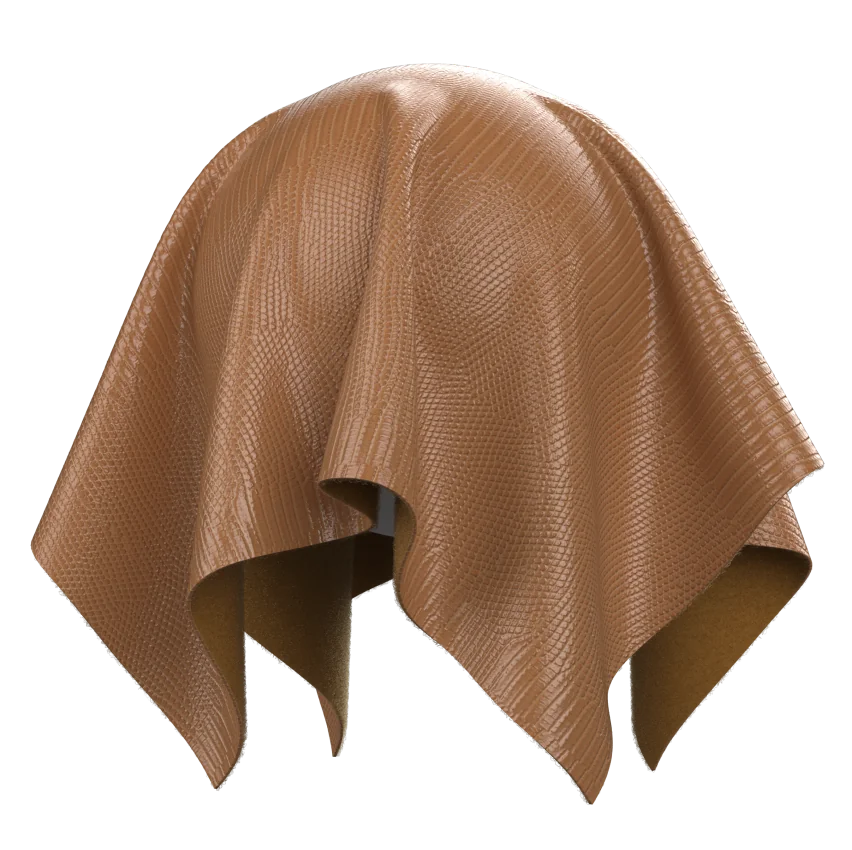
As of mid‑2025, technical reviews of virtual garment simulation agree that accuracy now depends less on rendering quality and more on how faithfully fabric input parameters mirror standardized mechanical tests such as ISO 13934 tensile properties and ISO 9073‑9 drape measurements. For brands and manufacturers scaling 3D sampling in 2026, that means virtual cloth engines must be treated as scientific models: every stretch, bend, and drape value should be traceable back to strip‑test tensile curves, drape coefficient calculations, and compression data generated in certified textile laboratories.
ISO digital textile simulation standard compliance.
From ISO and ASTM Test Benches to Virtual Cloth Parameters
Standardized tensile and drape tests provide the backbone for reliable virtual cloth physics. ISO 13934‑1 specifies how to determine maximum force and elongation at maximum force using the strip method, so laboratories produce stress‑strain curves and key values such as tensile strength and extensibility for woven and knitted fabrics under controlled conditions. ISO 13934‑2 complements this with a grab method, capturing how fabrics behave when clamped in a way that more closely resembles garment seams, which is critical for simulating localized tension around armholes, waistbands, or plackets.
On the drape side, ISO 9073‑9 defines a procedure to calculate drapability and drape coefficient for nonwovens, wovens, and knitted fabrics, often implemented via Cusick‑type drape testers that measure the area of fabric shadow projected onto a disk and convert it into a numerical coefficient. ASTM procedures related to fabric drape and opacity, used alongside ISO 9073‑9, give textile engineers a unified dataset of light transmittance, drape coefficient, thickness, and structural parameters like ends per inch and picks per inch. In practice, a sportswear brand might send an interlock knit and a ponte double‑knit to a certified lab, then receive full tensile and drape reports that form the basis for virtual cloth presets in their 3D platform.
Virtual garment simulation research stresses that these laboratory‑derived parameters must be transformed into the specific mechanical inputs required by simulation engines: bending rigidity, shear stiffness, stretch curves, and weight per unit area. When a simulation system asks for “weft extensibility at 10 N” or “shear at 10°,” those values should be extracted from ISO 13934 tensile tests and complementary shear measurements, not approximated from subjective handfeel. Otherwise, garments may look plausible on screen but fail to match real prototypes during fit sessions, leading to mistrust of 3D tools among pattern makers and merchandisers.
How Style3D Translates Lab Data into Virtual Cloth Physics
Style3D’s fabric physics engine is designed around the idea that test‑bench data from ISO and ASTM protocols must flow directly into simulation math, rather than being manually interpreted each time a new fabric enters the system. In typical workflows, a materials engineer uploads results from ISO 13934 tensile tests — including maximum force, elongation at maximum force, and full stress‑strain curves in warp and weft — plus ISO 9073‑9 drape coefficient values and fabric weight. The platform parses these results and maps them to internal parameters such as longitudinal stiffness, transverse stiffness, shear modulus, and bending resistance, using calibration functions validated against published simulation studies and industry guidance on virtual fabric measurement.
From a practitioner perspective, this becomes visible when a 3D technologist imports a new twill suiting or sateen shirting into the Style3D material library. They begin by selecting a test protocol profile (for example, “ISO 13934‑1 strip + ISO 9073‑9 drape”), then upload or manually enter warp and weft tensile curves, drape coefficient, and thickness. The system automatically fits these data points to pre‑defined non‑linear elasticity models, ensuring that simulated elongation at typical garment loads (such as 20–50 N in waist areas or 5–15 N at sleeve caps) matches laboratory behaviour within a defined tolerance band. For pattern makers, the key advantage is that the same ponte or twill behaves consistently across different styles, because the cloth physics is anchored to repeatable tests rather than ad‑hoc adjustments for each garment.
Where brands already operate their own test labs, Style3D can integrate ISO and ASTM result files via structured formats, so that tensile and drape metrics feed directly into material templates without transcription errors. In manufacturing contexts, such as workwear or uniforms subject to performance standards, this alignment between virtual and physical data helps ensure that 3D prototypes respect the mechanical limits established during testing, reducing the risk that virtual samples suggest stretch or drape behaviour that would compromise safety or comfort in real TOP production.
Honest Limits: Where Cloth Physics Still Diverges from Reality
Even with standardized calibration, virtual cloth physics is not a perfect mirror of physical garments. Technical reviews acknowledge that current simulation models still struggle to capture complex phenomena such as local buckling, friction between layers, and multi‑axial compression, particularly in highly structured garments or multi‑layer assemblies. This is evident in lingerie underwire zones, padded bras, and workwear with multiple reinforcing layers, where interlock knits, foam, and woven shells interact in ways that exceed simple tensile and drape characterizations.
Another limitation lies in the translation from flat test specimens to three‑dimensional garment shapes. ISO 13934 tensile tests and ISO 9073‑9 drape measurements are performed on uniform samples, which do not account for seam allowances, fusing, or localized stitching patterns that alter stiffness and drapability in final products. Simulation engines can approximate these effects through seam stiffness parameters and layer‑based modeling, but they still rely on assumptions that may diverge from reality for complex constructions such as quilted outerwear or engineered sportswear meshes. Hardware constraints also play a role: fine‑grained physics models that more closely match lab data require higher computational resources, so production teams often choose simplified simulation settings to keep iteration times manageable, trading some accuracy for speed in sample‑room workflows.
For decision‑makers, these limits mean that even well‑calibrated virtual cloth should be treated as a decision‑support tool, not a total replacement for physical sampling. In categories where comfort and safety are critical — technical sportswear, protective workwear, or medical textiles — brands typically maintain at least one round of physical fit or performance testing, even when virtual simulations have significantly reduced earlier sample tickets.
Counter‑Consensus: You Do Not Need Exotic Lab Equipment to Start Accurate Cloth Simulation
A common assumption in digital apparel circles is that you must invest in specialized, proprietary measurement rigs before you can achieve commercially credible cloth physics in 3D engines. Evidence from fabric‑simulation research does not fully support that claim. Critical reviews show that many simulation‑relevant parameters — tensile behaviour, drape coefficient, bending and shear proxies — can be derived from standard ISO and ASTM tests performed in typical textile laboratories, with careful post‑processing and parameter mapping.
In practice, brands and schools often start with data from ISO 13934 tensile tests, ISO 9073‑9 drape measurements, and standard thickness and weight readings, then feed those into simulation platforms that are designed to interpret the results. Additional specialized measurements, such as pure shear or bending curves, improve accuracy but are not strictly required to achieve useful alignment between virtual and physical behaviour for many ready‑to‑wear categories. This counter‑consensus view opens the door for mid‑sized manufacturers and design programs that already run basic textile testing: they can move into physics‑based 3D without waiting for exotic equipment, provided they invest in robust data management and calibration workflows.
The critical step is not acquiring more machines but ensuring that existing test data is systematically captured, digitized, and translated into the specific formats that simulation engines expect. When ISO and ASTM results are treated as first‑class digital assets rather than PDF attachments, fashion teams can build reliable cloth libraries across categories such as menswear, sportswear, and workwear, gradually expanding into more advanced measurements as needs evolve.
Case Insight: Digital–Physical Alignment in Sportswear and Workwear
Sportswear and workwear use cases highlight how calibrated cloth physics improves decision‑making across design, sampling, and production. Studies of woven fabric mechanical properties for garment simulation demonstrate that realistic virtual garments require precise modeling of extensibility, bending, and shear, particularly when fabrics must maintain comfort and performance under load and motion. For a Nordic outdoor brand working with performance interlock knits and brushed melange fleeces, accurate simulation of stretch and recovery can reduce the number of proto and fit samples needed to validate patterns across size ranges.
Similarly, research on textile ergonomics and comfort calculations shows how thermal resistance, moisture vapor transmission, and air permeability interact with mechanical properties to shape wearer experience in sportswear and protective workwear. When those mechanical properties — tensile strength from ISO 13934, drape coefficient from ISO 9073‑9, and compression behaviour inferred from thickness and weight — are correctly mapped into virtual cloth parameters, designers can see how changes in yarn counts, ends per inch, or finishing treatments will affect both drape and comfort before cutting fabric.
Manufacturers using platforms aligned to these standards often report shorter lab‑dip approval cycles and fewer sample‑room tickets, because virtual garments behave close enough to tested fabrics that colour and print decisions can be made with confidence on screen. In workwear production, where uniforms must meet performance criteria over long lifecycles, this digital‑physical alignment supports more consistent grading and pattern adjustments, especially when fabrics evolve due to spec changes or supplier shifts; updated ISO and ASTM test data can be re‑imported and re‑calibrated without rebuilding the entire virtual library from scratch.
Compliance Alignment Grid: Linking Platform Physics to ISO and ASTM Values
To manage calibration at scale, many teams benefit from a Compliance Alignment Grid that directly maps platform physics parameters to global testing standards. Along one axis, the grid lists virtual cloth metrics used by the platform — warp and weft stretch curves, shear stiffness, bending rigidity, weight‑based gravity scaling, and compression response. Along the other axis, it enumerates the corresponding ISO and ASTM tests: ISO 13934‑1 strip tensile for maximum force and elongation; ISO 13934‑2 grab tensile for localized strength; ISO 9073‑9 drape coefficient; drape and opacity procedures related to ASTM D3691/D3691M; and supplementary thickness and weight tests.
Each cell in the grid specifies how a lab output becomes a platform input. For example, “warp strip tensile curve (ISO 13934‑1) → warp stretch function in simulation engine,” or “drape coefficient (ISO 9073‑9) → base bending stiffness and gravity scaling for fabric preset.” The grid also documents any assumptions or conversion formulas, such as how grab test results are normalized to strip‑test data, or how drape coefficient interacts with fabric weight to produce fold formation in virtual garments.
From a governance perspective, the Compliance Alignment Grid acts as a technical standard internal to the brand or school, ensuring that material teams, pattern makers, and simulation specialists share a common understanding of how physical tests drive digital behaviour. It can be versioned and audited, with entries updated when ISO standards are revised or new ASTM protocols are adopted. In 2026, this kind of grid increasingly serves as a bridge between corporate quality systems — often based on ISO 9001 and OEKO‑TEX certification processes — and virtual production pipelines, making it easier to demonstrate to clients or regulators that virtual sampling is anchored to recognized test methods rather than ad‑hoc approximations.
Frequently Asked Questions
How do ISO 13934 tensile tests improve virtual cloth accuracy?
By providing standardized maximum force and elongation values, plus full stress‑strain curves in warp and weft directions, ISO 13934‑1 and 13934‑2 allow simulation engines to define stretch behaviour that closely matches real fabrics under garment‑relevant loads.
What is drape coefficient and why does it matter for simulation?
Drape coefficient, defined in ISO 9073‑9 and measured via tests such as the Cusick method, quantifies how fabric deforms under its own weight, so accurate drape coefficients help virtual garments form folds and silhouettes that reflect actual fabric flexibility and stiffness.
Do we need specialized equipment beyond standard ISO and ASTM testing?
Industry reviews indicate that many key parameters for garment simulation can be derived from widely available ISO and ASTM tests, and while extra shear and bending measurements improve fidelity, most brands can achieve useful accuracy by systematically converting standard lab outputs into simulation inputs.
How often should we recalibrate cloth physics against lab data?
Any time fabric specifications change — yarn counts, constructions, finishes, or supplier — new ISO and ASTM tests should be run and their results used to refresh virtual cloth parameters, ensuring that simulations stay aligned with current production fabrics rather than legacy data.
Where in the apparel workflow does physics calibration have the biggest impact?
The greatest benefits typically appear in proto and fit stages, where realistic stretch and drape reduce the number of physical samples needed to validate pattern adjustments, and in workwear and sportswear, where accurate mechanical modelling supports comfort and performance decisions.
Sources
-
ISO 13934-1:2013 Textiles — Tensile properties of fabrics — Strip method
-
EN ISO 13934-1:1999 Textiles — Tensile properties of fabrics
-
Modeling and Optimization of Performance Properties of Drapery Fabrics Made by Cotton
-
IEEE-IC White Paper: The Measurement of Fabric Properties for Virtual Simulation — A Critical Review
-
Analysis of Woven Fabric Mechanical Properties in the Garment Simulation Process
-
Textile Ergonomics and Comfort Calculations for Textile Manufacturing