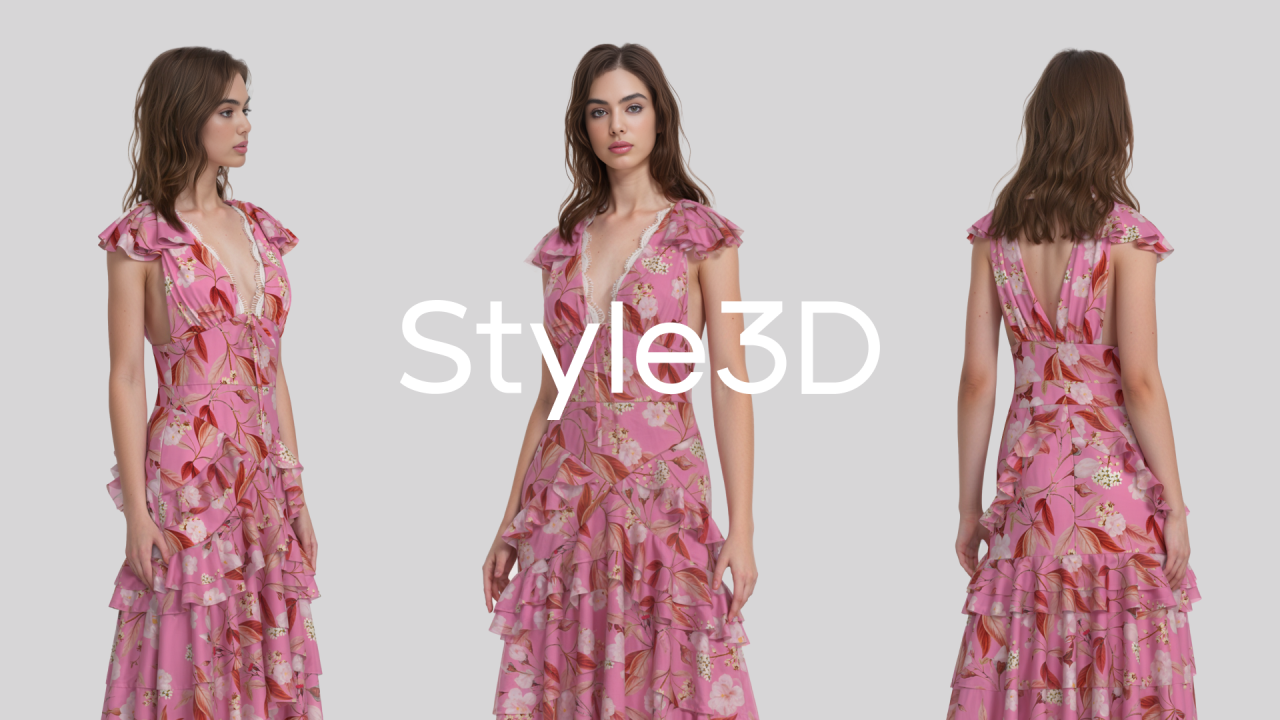
As of Q1 2026, business research indicates that 62% of fashion executives have utilized generative AI, with product development and marketing identified as the most common use cases across the industry. Manufacturers like Lever Style and Springtex are now integrating AI rendering into 3D sampling workflows, cutting sample revisions by over 50% and replacing physical prototypes with photorealistic digital equivalents.
The Manufacturer’s Dilemma: Speed Demands Clash with Physical Sampling Bottlenecks
Apparel manufacturers face two converging pressures in 2026. Brand clients demand faster design iterations and supply chain agility while simultaneously pushing for sustainability credentials that reduce waste. Traditional production workflows struggle under both demands. A typical sampling cycle involves pattern makers importing DXF files, sample rooms sewing proto garments, couriers shipping samples internationally, and design teams reviewing fit across multiple rounds. Each iteration adds 1–3 weeks depending on factory location and lab-dip turnaround times.
Sample-room ticket counts often exceed 200–500 per collection across design development, fitting, sales, and production phases. Forty percent of these physical samples never reach production—they are created, evaluated, rejected, and discarded. Textile dyeing ranks as the second largest polluter of water globally, and manufacturing a single pair of jeans requires approximately 2,000 gallons of water.
3D digital sampling disrupts this sequence. Designers create or import 2D patterns into simulation software where flat patterns assemble onto virtual avatars. Digital fabric libraries contain mechanical properties—drape, stretch, weight, texture—of thousands of materials. The simulation applies these properties to show how garments behave under gravity and movement. Designers adjust patterns, swap colors, and test fit on virtual avatars in hours rather than weeks.
How AI Rendering Transforms 3D Sampling Beyond Traditional Visualization
Traditional 3D sampling already reduces physical prototypes, but AI rendering adds a critical layer: photorealism without physical samples. Style3D’s AI rendering tool iWish creates ultra-realistic style renderings that deliver a true “what you see is what you get” experience. This breaks a long-standing tradeoff in digital fashion: faster rendering speeds typically sacrificed fabric realism, while high-fidelity renders required hours of computation time.
The workflow difference is concrete. Before AI integration, manufacturers struggled with limited parameter adjustments, inconsistent perspectives across multi-angle views, and color inaccuracy that rendered AI outputs unusable for client approval. AI-powered 3D rendering now delivers ultra-realistic garment visuals with seamless multi-angle modeling and precise customization, achieving photorealism quality that matches product photography.
AI-enhanced concept generation begins even earlier in the process. Tools create initial design concepts from text descriptions or reference images, informing design direction before any pattern work begins. This front-loads iteration, reducing back-and-forth at the 3D sampling stage. Automated variation generation enables brands to test hundreds of colorways and fabric combinations digitally in the time it previously took to produce a single physical sample.
Lever Style’s Integration: From 3D Asset Library to AI-Enhanced Customer Review
Lever Style is a seasoned apparel manufacturer serving top brands across the U.S., Europe, and Asia-Pacific. Their product range spans womenswear, menswear, knits, suits, outdoor, and cycling apparel. As an early adopter of 3D technology, Lever Style long used digital tools to collaborate with clients efficiently. However, before integrating iWish, they faced three specific constraints: lack of precision with limited parameter adjustments leading to inefficient modifications, inconsistent perspectives where AI-generated multi-angle views deviated from original designs, and color inaccuracy producing unusable renderings.
With iWish, these issues resolved. Lever Style now fully integrates iWish into operations, leveraging their vast 3D asset library to create hyper-realistic digital samples for customer review. This significantly reduced the need for physical prototypes, slashed development costs, and accelerated production cycles while reinforcing their digital asset ecosystem. Faster development and turnaround times enabled Lever Style to secure more orders while laying the foundation for a fully digitalized business.
The operational impact extends beyond sampling. High-quality renders can be used directly for sales presentations, lookbooks, and e-commerce photography, skipping the photo-shoot stage entirely. A designer in Milan, a buyer in New York, and a factory in Vietnam can simultaneously review and annotate the same 3D garment, eliminating delays and costs of shipping physical samples internationally.
Springtex’s Approach: Vertical Integration Meets Generative AI for Design Inspiration
Springtex International, founded in 2004, serves as a trusted manufacturer of premium women’s fashion for high-end malls across Europe and the US. Their vertically integrated smart factory provides comprehensive one-stop solutions, enabling real-time style tracking and streamlining clients’ supply chains. With extensive expertise in digital fashion, Springtex recognized limitations of traditional 3D rendering in achieving true realism and embraced AI+3D integration to enhance customer experience.
With iWish, Springtex achieved a breakthrough in 3D rendering realism. AI algorithms refine model details, lighting, and fabric textures, allowing clients to preview final products with unprecedented clarity. This enables quicker feedback, significantly reduces operational costs and development time, and strengthens client relationships. Today, almost all Springtex designs are first developed in Style3D and enhanced with iWish for client approval before physical prototyping.
Springtex also adopted iCreate, a generative AI tool for fashion inspirations. By combining their extensive style and pattern database with iCreate’s generation capabilities, Springtex efficiently develops new designs at lower costs. Springtex sees iWish’s seamless integration with 3D models as its key advantage over other AI tools, offering great precision and efficiency in both generation and modification processes. Looking ahead, Springtex plans to expand Style3D’s AI tools beyond design visualization to marketing applications like trade show displays and new product launches, which will significantly cut costs related to model photography and studio rentals.
Counter-Consensus: AI Rendering Doesn’t Require Replacing Existing 3D Workflows
The common assumption that AI adoption requires replacing entire 3D software stacks is not supported by implementation evidence. Successful rollouts more often begin as enhancements to existing digital sampling pipelines. Lever Style had long used 3D technology before integrating iWish; Springtex recognized 3D limitations before adding AI rendering. Manufacturers can layer AI rendering on top of established 3D workflows, using AI for client-facing visuals while maintaining traditional 3D simulation for internal pattern development.
This parallels the broader digital sampling adoption pattern. The claim that 3D adoption requires replacing the entire PLM stack is not supported by industry evidence—successful rollouts more often begin as parallel sampling pipelines. Brands implement digital sampling as standalone workflow for early-stage design and fit, then export approved patterns and tech packs to legacy PLM for production management.
Honest Limitations: Where AI + 3D Workflows Still Have Friction
Despite significant gains, AI-driven digital sampling has unresolved tradeoffs. Fabric drape simulation accuracy for performance knits remains imperfect—stretch fabrics with complex mechanical properties like four-way stretch compression wear or interlock knits with variable recovery can still diverge from physical behavior. The learning curve for traditional pattern makers transitioning to 3D environments is real; the skill set shifts from flat pattern drafting to understanding virtual physics parameters.
Hardware requirements matter too. GPU-accelerated rendering for real-time previews demands modern workstations with dedicated graphics cards, representing capital investment for smaller studios. Integration friction with legacy PLM systems persists; while parallel pipelines work, full bi-directional sync between 3D software and PLM requires custom API development that many mid-sized brands cannot afford.
There’s also a fidelity-speed tradeoff. Last-month tech-pack revision cycles might show acceptable visual fidelity but fail to capture subtle texture variations that affect buyer decisions in premium categories. AI color accuracy, while improved, still requires calibration against physical lab dips for critical color matching in categories like menswear suits where wool fabric variations matter. Brands must decide whether to prioritize iteration speed or simulation accuracy based on category and price point.
The 2026 Inflection Point: Over 2,100 Global Companies Now Using Style3D
Style3D’s AI + 3D technology now enables over 2,100 global fashion companies to achieve digital breakthroughs. Digital fashion sampling in 2025 focuses on AI, 3D prototyping, and virtual reality to streamline design processes, reduce costs, and promote sustainability. These innovations allow brands to create realistic virtual prototypes, cutting physical sample production by up to 80%.
The convergence of AI with digital sampling creates capabilities that didn’t exist two years ago. AI-generated initial concepts reduce 3D iterations by providing curated starting points for pattern development. AI-powered fabric simulation improves digital draping realism by learning from physical fabric testing data. A systematic review in Discover Applied Sciences found that AI is a particularly promising ally for promoting sustainability in fashion, with applications spanning the entire product lifecycle.
Digital sampling reduces costs 70–90% compared to physical equivalents and compresses development timelines from weeks to days. VR prototypes can reduce lead times by up to 40%, accelerating design processes and fostering global collaboration. The technology is proven, the business case is clear, and the regulatory environment is moving toward mandatory digital documentation through the EU Digital Product Passport regulation.
Frequently Asked Questions
What specific problems does iWish solve for manufacturers?
iWish resolves three key constraints: lack of precision with limited parameter adjustments, inconsistent perspectives where multi-angle views deviated from original designs, and color inaccuracy producing unusable renderings. It delivers ultra-realistic garment visuals with seamless multi-angle modeling and precise customization achieving photorealism quality.
How does Springtex use AI tools beyond client approval?
Springtex uses iCreate, a generative AI tool for fashion inspirations, combining their extensive style and pattern database with AI generation capabilities to develop new designs at lower costs. They also plan to expand AI tools to marketing applications like trade show displays and product launches, cutting model photography and studio rental costs.
What percentage of samples can manufacturers eliminate with digital sampling?
Digital sampling cuts physical sample production by up to 80%. Tommy Hilfiger achieved an 80% reduction in physical sample production after committing to 100% 3D apparel design, while Hugo Boss reduced physical samples by more than 30% while improving design times by 85%.
Does AI rendering replace the need for any physical samples?
No. Most manufacturers using digital sampling still produce one “top” physical sample before launching production, though some have eliminated physical samples for early-stage iterations. Digital sampling reduces physical samples by 60–80% but doesn’t eliminate them completely.
Sources
-
Generative AI in 2024: Adoption Trends and Major Use Cases in the Fashion Industry
-
Style3D X Lever Style & Springtex: Pioneering AI-Driven Digital Sampling
