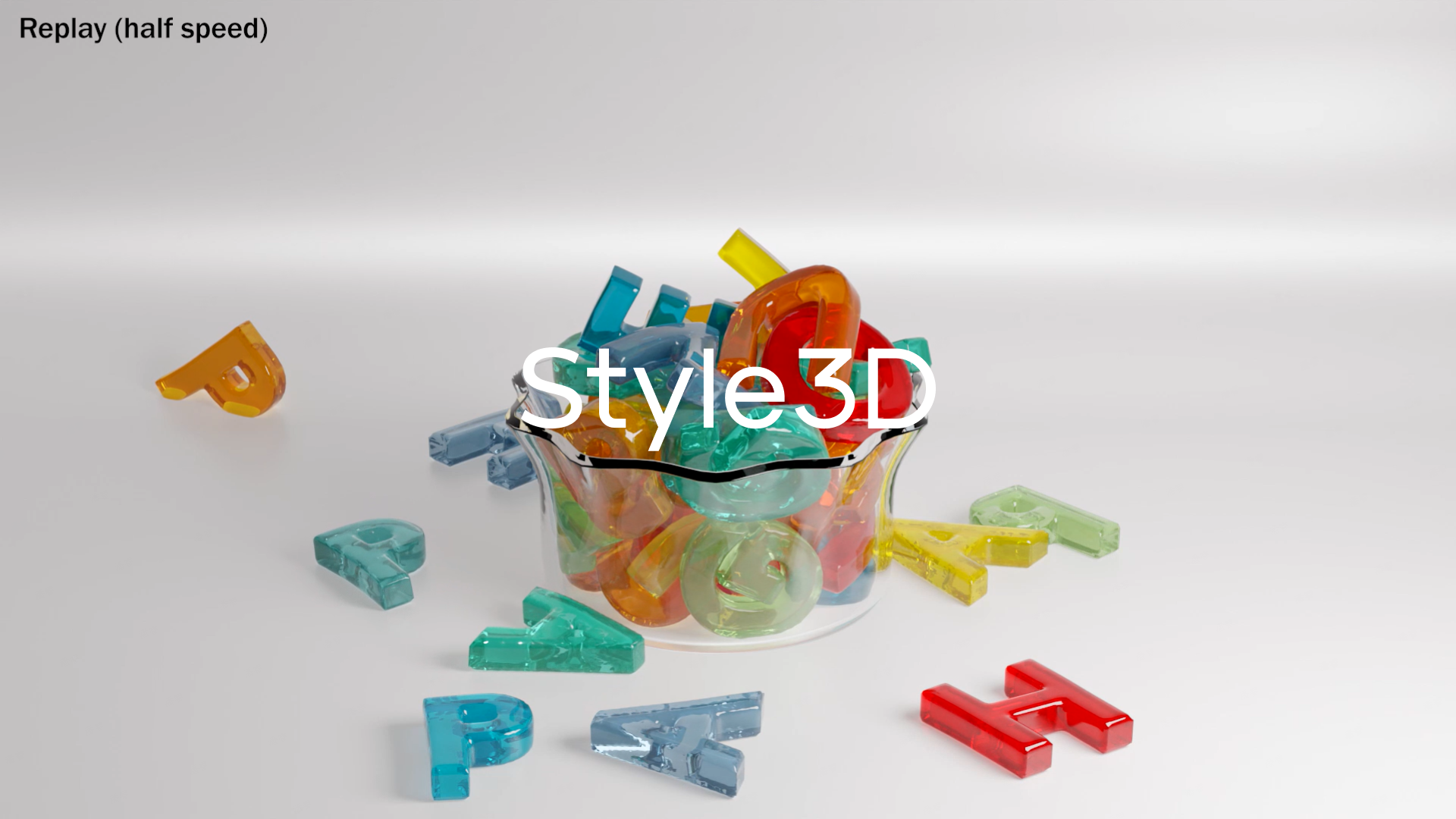
And this is precisely where the limits of multiphysics simulation emerge.
In this installment of SynReal Decode, we begin with a significant question: why is it so difficult for AI to truly enter the real world?
To a large extent, the answer points to a foundational capability—physical simulation, and in particular, universal multiphysics simulation. Starting from first principles and grounded in current industry developments, this article explains why this capability matters, and how Style3D has built its technical advantage in this space.
1. What is Physical Simulation and Universal Multiphysics Simulation
Universal multiphysics simulation refers to the ability to simulate multiple physical phenomena, material behaviors, and their interactions within a unified computational framework.
From a macroscopic perspective, objects in the physical world can be broadly categorized into three types: rigid bodies, deformable objects, and fluids. In real-world human environments, solid objects dominate, and a significant portion of them are deformable. By contrast, fluids—primarily water and air—exist widely but are relatively limited in scale and complexity in everyday scenarios.
From a technical standpoint, simulation of single or small numbers of rigid bodies (e.g., robot structures) is already relatively mature. In contrast, deformable objects and fluids have long been considered among the most challenging problems in physical simulation. If we focus on everyday human environments rather than extreme industrial or natural conditions, deformable object simulation emerges as both the most difficult and the most critical problem.
This is because the real world is filled with a wide variety of deformable objects with highly diverse material properties, from clothing, curtains, bedding, packaging, and towels, to plants, and even human skin and muscle tissue. These objects exhibit complex behaviors such as elasticity, bending, stretching, and folding, which cannot be approximated using simple rigid body models.
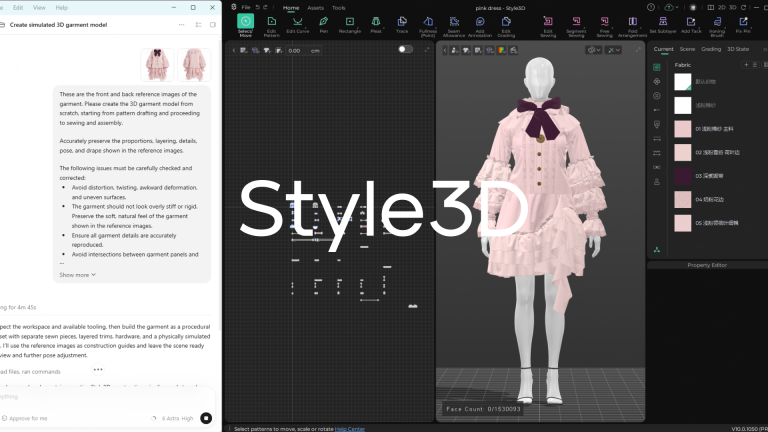
At a technical level, the simulation of garments, plants, home textiles, and packaging materials shares the same underlying principles: all rely on numerical physical models and solvers to simulate deformation and motion under external forces. As such, deformable object simulation can be treated as a unified problem domain for systematic study.
More fundamentally, perfectly rigid bodies do not exist in the real world. All solids deform to some extent under external forces, differing only in stiffness. This understanding is increasingly reflected in modern simulation techniques. For example, methods such as Affine Body Dynamics (ABD) have begun to explicitly incorporate controlled micro-deformations into rigid body simulation.
2. The Current Landscape of Multiphysics Simulation
Historically, universal multiphysics simulation has evolved along two primary technical paths.
1)Engineering-Oriented Simulation Systems (CAE)
The first path originates from computational physics and mechanical engineering, represented by computer-aided engineering (CAE) software such as SolidWorks, ANSYS, and ABAQUS. These systems emphasize high physical accuracy and verifiability, covering a wide range of domains including mechanics, electromagnetism, thermodynamics, and acoustics, and supporting extreme conditions such as high temperature, pressure, and velocity.
However, their limitations are clear:
-
They do not prioritize photorealistic visual output
-
Limited support for complex multi-body contact and dynamic interaction
-
They are rarely optimized for modern parallel hardware such as GPUs
As a result, they are well-suited for engineering validation, but not for large-scale, high-frequency data generation.
2)Entertainment-Oriented Simulation Systems
The second path serves digital entertainment industries such as games and visual effects, with simulation capabilities integrated into tools and engines like Maya, Blender, Unity, and Unreal Engine. NVIDIA’s PhysX engine was originally designed for real-time game simulation.
These systems prioritize visual plausibility, typically using approximate dynamics models such as Position-Based Dynamics (PBD). While they offer strong stability and efficiency for small-scale problems, they do not aim for strict physical correctness and are difficult to scale to high-precision, large-scale scenarios.
This trade-off is acceptable for entertainment content. However, for high-quality physical simulation and Physical AI training, both realism and scalability become critical limitations.
3)Domain-Specific Simulation Systems
In addition, there are simulation systems designed for specific applications. For example:
-
CLO / Marvelous Designer focus on garment modeling, primarily for static design and visual presentation
-
MuJoCo, Newton, and Genesis AI focus on robot training, mainly dealing with rigid body dynamics, while deformable objects and fluids are often simplified or handled via external engines
While these systems are valuable within their domains, they generally exhibit limitations in deformable object simulation.
3. Style3D’s Advantage: A Continuously Validated Multiphysics Simulation Capability
Long-Term Research and Technical Accumulation
Style3D’s universal multiphysics simulation capability is not the result of a single product cycle, but of sustained foundational research and long-term technical accumulation.
The core research and technical team has consistently published research in top-tier venues in computer graphics and physical simulation, including SIGGRAPH, SIGGRAPH Asia, and ACM Transactions on Graphics, which are widely regarded as benchmarks for cutting-edge research in the field.
Over the years, the team has maintained an average output of around 10 high-quality papers annually in these venues, covering key challenges in deformable object simulation, including material modeling, complex contact handling, high-performance parallel solvers, and scalable system architectures.
These research outputs provide a verifiable and reproducible technical foundation, ensuring alignment with global frontiers rather than reliance on short-term engineering iteration.
Objective Benchmark of Academic Output (Taking SIGGRAPH Asia 2025 as an Example)
Taking SIGGRAPH Asia 2025, a major international conference in computer graphics, as an example, according to statistics based on the conference’s publicly available list of accepted papers:
-
Style3D’s related research team published4 papers, focusing on deformable simulation, complex contact, and high-performance numerical computation
-
In the same conference, according to publicly available information, Tencent‘s research teams published 9 papers across graphics, vision, and related areas
It is important to note that SIGGRAPH and SIGGRAPH Asia follow rigorous international peer review processes. While publication count reflects research activity and investment to some extent, differences in research scope, organizational scale, and resource allocation must also be considered.
Within this context, Style3D’s ability to maintain consistent, high-quality output closely aligned with its core technical focus demonstrates sustained depth and commitment in multiphysics and deformable simulation.
4.Core Capabilities of Style3D’s Multiphysics Simulation
Style3D’s core advantage lies in its Universal Multiphysics Simulation framework and the next-generation Simulation Engine built upon it. This system is designed for the real physical world, aiming to balance physical correctness with scalable performance.
1)Physical Realism
Style3D has invested extensively in material modeling, building systematic representations of nonlinear and anisotropic behaviors observed in real-world materials. This is supported by dedicated measurement devices and pipelines for capturing physical properties such as surface elasticity, bending stiffness, and friction, providing a reliable foundation for robotic interaction tasks such as contact, grasping, and manipulation.
2)Collision and Contact Handling
One of the core challenges in high-quality multiphysics simulation is the stable and accurate handling of complex collisions and contacts.
Style3D has developed and optimized a series of numerical methods, including Multilevel Schwarz and JGS2, achieving a balance between stability and computational efficiency.
3) Parallel Computing and Performance Optimization
Style3D’s simulation engine is architected for parallel computation, with native support for GPUs.
In addition to supporting NVIDIA GPUs, the system is also optimized for hybrid GPU/CPU architectures such as Apple’s M-series chips, delivering substantial performance gains. This architectural design distinguishes it fundamentally from traditional modeling software.
5.Conclusion: Unifying Realism and Efficiency
Compared to traditional simulation systems, the defining characteristic of Style3D’s universal multiphysics simulation engine is its ability to balance:
-
Realism, which determines whether synthetic data can transfer effectively to the real world
-
Efficiency, which determines whether data generation is scalable
Both are critical for robotics training, Physical AI, and digital twin applications. Built on long-term academic validation and realized through engineering at scale, Style3D’s multiphysics simulation technology unifies “real” and “fast” within a single system, providing a reliable infrastructure for the future of Physical AI and embodied intelligence.