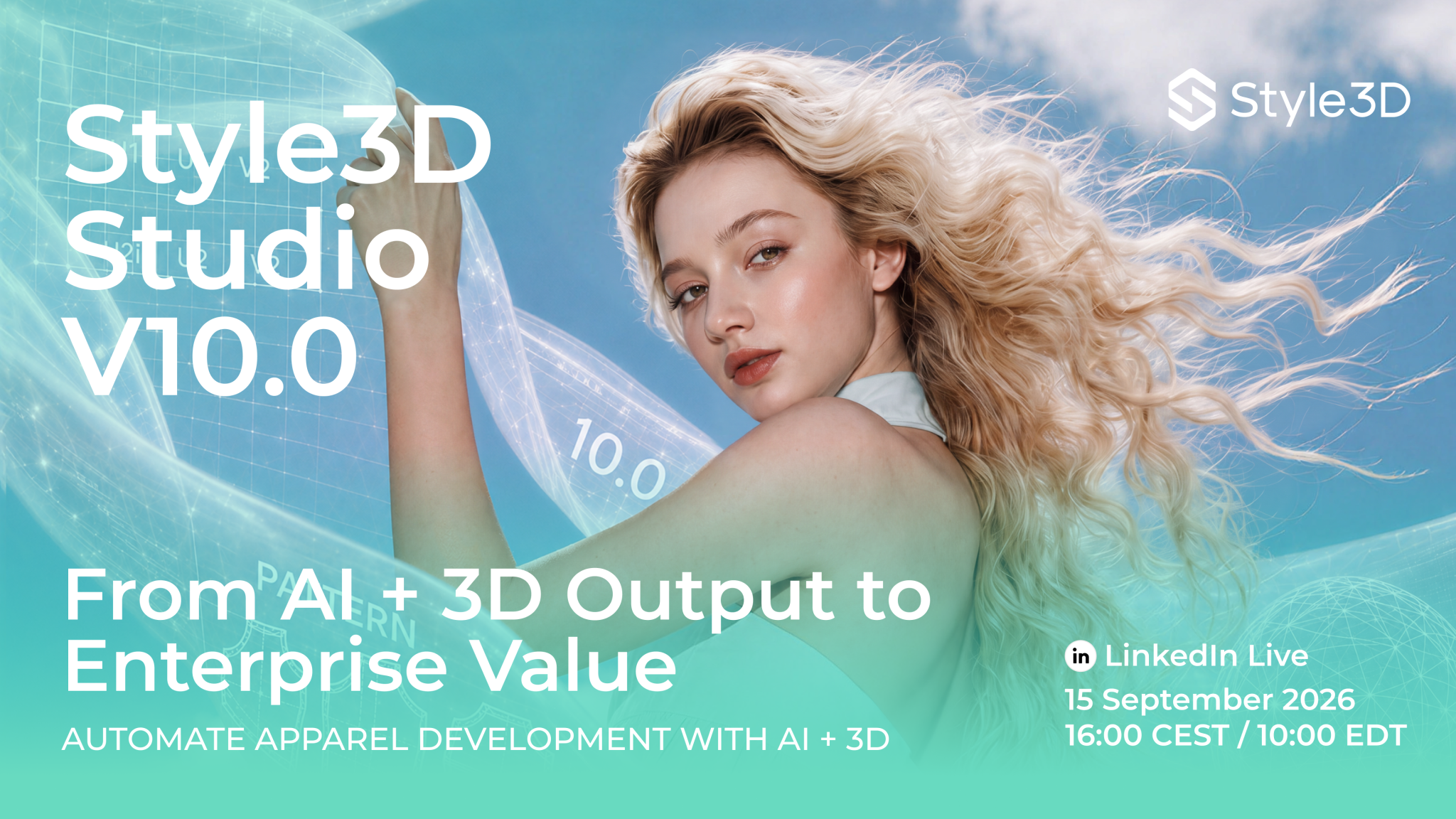
As of Q1 2026, McKinsey’s State of Fashion report shows more than 35% of fashion executives already use generative AI for image creation and product discovery, marking a shift from experimentation to operational necessity. The tools powering this transition fall into distinct categories, and for apparel brands evaluating 3D workflows, the differences matter more than vendor marketing suggests.
This article compares the top AI 3D model generators available in 2026, with specific attention to how Style3D’s integrated approach addresses the full apparel value chain—from initial sketch through TOP (Top of Production) handoff.
Evaluating AI 3D Generators for Apparel Workflows
Not all AI 3D model generators serve fashion equally. General-purpose tools excel at creating props, characters, or environment assets, but they lack the physics engines and pattern-based construction logic required for wearable garments. When a pattern maker imports a DXF file into Style3D, the typical first friction point is map alignment at the grainline, not the rendering quality itself.
The five tools worth evaluating for fashion fall into three categories:
Apparel-Specific Platforms: Style3D leads here with full garment construction from 2D patterns, realistic fabric simulation (including interlock, ponte, and twill weaves), and direct export to production-ready specifications.
Image-to-3D Generalists: Meshy AI and Tripo3D generate 3D geometry from single images quickly, but their output requires manual retopology for production use. They work well for e-commerce visualization but not for tech pack generation.
Hybrid Design Tools: Dzine.ai and Alpha3D offer early-stage concept generation with some garment-specific features, though they lack the complete sampling-to-manufacturing pipeline.
For ready-to-wear brands in the €50M–€500M revenue band, the decision hinges on whether you need production handoff or just marketing visuals.
Style3D’s Integrated 3D and AI Architecture
Style3D combines four technology layers that most competitors keep separate. The first layer handles 2D pattern input with AAMA-compliant DXF import, automatic seam recognition, and grainline mapping. The second layer simulates fabric physics using a mass-spring system tuned for apparel behaviors—stretch, drape, and recovery—rather than generic rigid-body physics.
The third layer applies AI functions: image-to-pattern conversion, automatic colorway generation with Pantone codes, and AI model try-on visuals. The fourth layer manages collaboration through cloud-based version control, digital tech pack assembly, and VR showroom integration.
Mengdi Group, a USD 50 million annual export manufacturer serving global apparel brands, compressed development time from 3 days to 10 minutes after adopting this architecture. The company accumulated over 10,000 digitized styles and 8,000 virtual samples within two years. Their 3D team’s monthly workload grew from 100–200 sample renderings to more than 700–800 AI model images, provided proactively to clients even when not requested.
This integration means a single style launch requires minutes instead of hours. What once took four hours to assemble pitching materials now completes by a newcomer in mere minutes using Style3D’s Showcase Mini-Program and Cloud platform.
How Competitors Handle Garment-Specific Challenges
Meshy AI generates 3D models from images in under a minute, producing game-ready assets with PBR textures. However, the output lacks seam lines, pattern pieces, or size grading information. Designers must manually reconstruct the garment structure in Maya or Blender before the asset works for fit analysis or production.
Tripo3D offers similar speed with text-to-3D and image-to-3D capabilities. Its strength lies in concept iteration during the proto stage, not fit validation. The tool cannot simulate how a sateen fabric will drape differently from scuba knit on the same block.
Dzine.ai focuses on fashion design specifically, offering AI fashion design tools for mood board generation and style transfer. It excels at creative exploration but does not provide the physical simulation accuracy needed for fit approval cycles.
Alpha3D targets e-commerce product visualization, generating 3D models from photos for AR try-on experiences. The output serves marketing teams well but does not integrate with PLM systems or generate BOM (Bill of Materials) data.
The common thread: none of these tools replaces the full sampling pipeline. They complement it at specific stages.
Category-Specific Workflow Differences
Lingerie development presents unique challenges that general 3D tools struggle with. Underwire simulation requires different physics parameters than outerwear—the tension distribution around the cup differs fundamentally from how a twill blazer drapes over shoulders.
Wolf Lingerie, a France-based company near Strasbourg employing around 180 people (76% women), developed all their models directly in 3D using Style3D. The team creates 10 to 15 color variations instantly using Pantone codes, completing changes in just a few minutes without additional production effort. They generate realistic product visuals without a model or photoshoot using iWish, creating five-second videos where a young woman walks along a beach in seconds.
For menswear, OLYMP’s digital excellence approach focuses on precise fit mapping across size ranges. Workwear at CWS requires durability simulation and safety standard compliance visualization. Sportswear at Eventyr Sport demands stretch recovery accuracy for performance fabrics.
Each category changes what “good enough” simulation means. A 5% error in drape for a flowing evening gown looks obvious. The same error in technical workwear might not matter if the safety certifications still hold.
Where 3D and AI Fashion Workflows Still Have Friction
Current limitations matter when you’re planning a rollout. Fabric drape simulation accuracy for performance knits remains inconsistent—high-spandex jerseys with complex mesh patterns still require physical fit sessions for final approval. The mass-spring physics engines approximate behavior but cannot yet predict how a new synthetic blend will behave after 20 wash cycles to ISO 105 standards.
The learning curve for traditional pattern makers is steeper than vendor demos suggest. Importing a DXF file works smoothly, but adjusting ease values for different body types requires understanding both the software and the underlying grading rules. Companies report 3–6 months before their pattern team achieves independent workflow mastery.
Hardware requirements also create friction. Real-time rendering of high-poly garments with detailed fabric textures demands GPUs with 8GB+ VRAM. Remote samerooms with older workstations struggle with lag during collaborative review sessions. Integration with legacy PLM systems remains manual for many brands—API connections exist but require custom development for older SAP or Gerber installations.
These limitations do not disqualify 3D workflows. They define where physical samples still belong in the process.
The Counter-Consensus Reality About 3D Adoption
The common industry assumption that 3D adoption requires replacing your entire PLM stack is not supported by implementation data. Successful rollouts more often begin as a parallel sampling pipeline running alongside existing workflows.
McKinsey’s State of Fashion 2026 reports that more than 35% of executives already use generative AI in areas like image creation and product discovery without full system replacement. Brands typically start with the proto and fit sample stages, where visual validation matters most, then gradually expand to salesman samples and eventually TOP visualization.
This phased approach means Mengdi Group’s transformation happened over two years, not overnight. They started with photo-capture and upload for sales staff, then gradually built electronic boards, VR showrooms, and AI model workflows. The “people on site, service on site” adoption strategy proved more effective than remote guidance.
You do not need to rip out your PLM to get 80% of the efficiency gains. Start where visual communication creates the most friction—typically color approvals and client presentations—and expand from there.
Making the Right Choice for Your Organization
Decision-makers should evaluate based on three criteria:
Production Handoff Required? If you need tech packs, size grading, and BOM data for manufacturers, choose an apparel-specific platform like Style3D. General 3D generators require manual reconstruction before production use.
Category Specialty Matters? Lingerie, menswear, workwear, and sportswear each have different physics requirements. Verify the tool accurately simulates your primary fabric types—interlock for basics, twill for denim, Ponte di Roma for structured knits.
Team Readiness Assessed? Pattern makers need 3–6 months to achieve independent mastery. Budget for training time and change management, not just software access.
For brands seeking the full value chain—from design through manufacturing handoff—Style3D’s integrated architecture delivers measurable results. Mengdi Group’s development time reduction from 3 days to 10 minutes and Wolf Lingerie’s instant 10–15 colorway creation demonstrate what’s possible when AI and 3D serve the complete apparel workflow.
Frequently Asked Questions
What distinguishes AI 3D garment generators from general 3D model tools? Apparel-specific tools include pattern-based construction, fabric physics simulation, size grading, and production-ready export. General tools create geometry without seam lines or technical specifications needed for manufacturing.
How long does it take for a pattern team to achieve independent 3D workflow mastery? Companies report 3–6 months for pattern makers to work independently after initial training. The learning curve involves understanding both the software interface and underlying grading rules.
Can 3D simulation replace all physical samples in the development cycle? Not yet. Performance knits with high spandex content and complex fabric behaviors still require physical fit sessions for final approval, especially for TOP validation and wash testing to ISO 105 standards.
What hardware specifications are needed for real-time 3D garment rendering? GPUs with 8GB+ VRAM are recommended for high-poly garments with detailed fabric textures. Older workstations struggle with lag during collaborative review sessions.
Does 3D adoption require replacing existing PLM systems? No. Successful rollouts typically begin as a parallel sampling pipeline alongside existing workflows, expanding gradually from proto and fit stages to salesman samples and TOP visualization.
How does Style3D handle colorway variations compared to traditional methods? Users select colors and provide Pantone codes, with changes completing in just a few minutes. Wolf Lingerie creates 10–15 color variations instantly without additional production effort.
